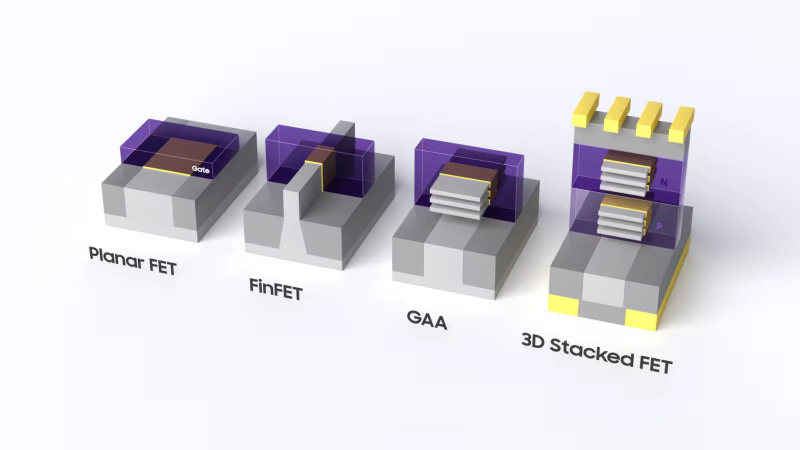
Samsung’s unveiling of the first 3D stacked transistor marks a new era in semiconductor design, as stacking could theoretically double device density instantly compared to current approaches. Announced at the 2026 VLSI Symposium, their 3D Stacked FET demonstrated a 42 nm gate pitch and several technical firsts, though commercial deployment appears some years away. While the technology’s impact will depend on successful scaling and adoption, I find the potential for improved energy efficiency and higher yields particularly interesting as the industry seeks solutions beyond miniaturization alone.
Top Stories This Week
- Samsung First To Build 3D Stacked Transistors
- US Lawmakers Push CHIPS Credits For Space Manufacturing
- Apple And Intel Are Working Together To Build Chips In America
- NASA’s X-59 Is About To Break The Sound Barrier For The First Time
- RIT Gets $3 Million NSF Grant To Advance Metal 3D Printing With Recycled Feedstocks
- Why Is Alibaba Ditching Chatbots For Robots And AI Agents?
- Why Scientists Launched Two Little Robots To The Moon
- Killer Robots Are Here – We Must Finally Decide Whether To Accept Them
- MIT Researchers Develop A Low-cost Technique To Get Lithium Out Of Rocks
- A Czech AI Startup Says It Can Detect Drones By Sound For €150 Per Sensor
- Can Open Source Help Deliver Sovereign AI?
Hardware Business News
US Lawmakers Push CHIPS Credits For Space Manufacturing

The idea of manufacturing semiconductors in space is moving closer to reality, as US lawmakers push to extend CHIPS Act tax credits to companies operating in low-Earth orbit. With clear legislative language, this initiative could provide needed certainty for private investment, and highlights the rapid pace of international competition, particularly with China.
Apple And Intel Are Working Together To Build Chips In America

It’s hard to ignore the significance of two industry giants like Apple and Intel partnering to manufacture chips in the US. While the initial scope appears limited to older Apple devices, this move could help to diversify Apple’s supply chain and strengthen domestic production. From this revelation, Intel’s stock has risen, though it’s clear that high-end Apple Silicon chips will remain with TSMC for now.
NASA’s X-59 Is About To Break The Sound Barrier For The First Time

NASA’s X-59 is about to attempt supersonic flight for the first time, marking a new major leap in the Quesst mission. After 15 test flights and gradual progression toward higher speeds, the team plans to exceed Mach 1 this June and eventually reach Mach 1.6 at 60,000 feet. While these early flights focus on validating performance and collecting shock wave data, the broader goal is to enable quieter supersonic travel over populated areas.
RIT Gets $3 Million NSF Grant To Advance Metal 3D Printing With Recycled Feedstocks
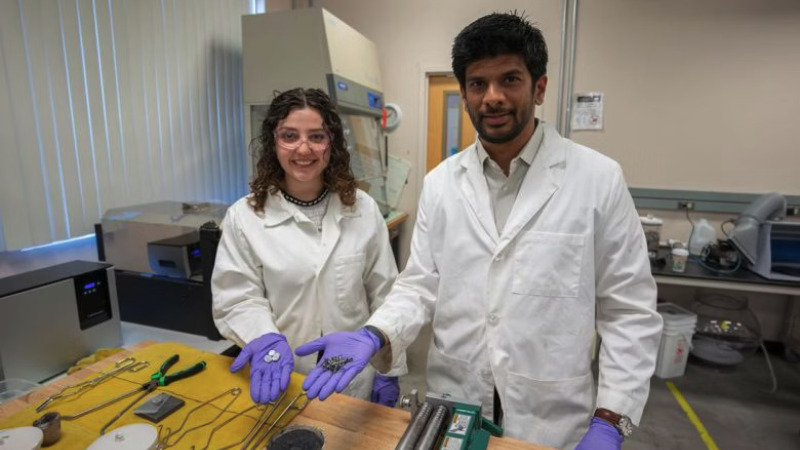
Metal 3D printing may soon take a leap forward as Rochester Institute of Technology secures a $3 million NSF grant to refine molten metal droplet jetting, specifically targeting recycled feedstocks. By separating melting from deposition and employing multi-nozzle systems, the team aims to sidestep the costs and hazards of metal powders while using scrap metals more flexibly. From an engineering perspective, improving access to affordable, sustainable inputs could influence both defense and commercial sectors, though practical implementation will ultimately determine its impact.
Hardware Engineering News
Why Is Alibaba Ditching Chatbots For Robots And AI Agents?

Alibaba’s latest hardware move caught my eye, as the company shifts focus from traditional chatbots to AI agents and robotics. By launching new AI models like RynnBrain and Qwen3.7-Max, and unveiling a custom 5nm RISC-V processor, Alibaba is targeting practical, real-world automation rather than just conversational interfaces. This approach addresses the growing need for AI that can complete multi-stage tasks with minimal oversight, which I see as a natural evolution as demands on automation increase across industries.
Why Scientists Launched Two Little Robots To The Moon

It’s not every day that we see robots the size of baseballs exploring the lunar surface, but that’s exactly what happened with Japan’s SLIM mission. JAXA’s compact rovers, which deploy by splitting open and using their own halves as wheels, offer a clever approach to traversing uneven terrain. Their autonomy and adaptability could prove valuable for scouting hazardous areas before sending in larger, more complex machines.
Killer Robots Are Here – We Must Finally Decide Whether To Accept Them

The arrival of fully autonomous weapons on the battlefield now means humanity has entered a new era for military hardware, as confirmed reports now prove these systems have acted without human oversight. From an engineering standpoint, the technical barriers to such autonomy have long been surmountable, given accessible components and open-source software. While the debate around regulation is intensifying, the technology’s low entry threshold will likely accelerate adoption unless clear international standards emerge.
Hardware R&D News
MIT Researchers Develop A Low-cost Technique To Get Lithium Out Of Rocks

A new low-temperature process from MIT researchers could reshape how lithium is extracted from hard rock minerals like spodumene, potentially making it both cleaner and more cost-effective. By using a liquid reagent, the team can separate lithium, aluminum, and silica at room temperature while recycling nearly all materials involved.
A Czech AI Startup Says It Can Detect Drones By Sound For €150 Per Sensor

Detecting drones by sound at €150 per sensor is the promise from Neuron Soundware, a Czech startup now adapting its industrial AI for airspace monitoring. Their Sound Shield system combines low-power microphones with Nvidia Jetson compute modules to identify drone signatures in real time, and they’re proposing dual use on electrical grids. The passive, low-cost approach is an interesting complement to radar, especially as the counter-drone market accelerates.
Open-Source Hardware News
Can Open Source Help Deliver Sovereign AI?

Discussions at a recent OpenUK round-table revealed that open source may play a vital role in advancing sovereign AI, not through isolation, but by enabling transparency, flexibility and resilience. While there was little agreement on a single definition of sovereignty, experts broadly acknowledged the importance of control over data and technology choices.