The idea of robots having a breakthrough “ChatGPT moment” is very possible, yet, real-world robotics progress is generally more incremental. While AI-powered robots are beginning to take on tasks in factories, warehouses, and even homes, the complexity of human environments means we are still far from general-purpose machines. As an engineer, I see the real advances coming from coordinated AI systems combined with specialized hardware, not from a single algorithmic leap or eureka moment. The path forward is steady, with each practical deployment yielding valuable lessons and slowly expanding what robots can reliably achieve.
Top Stories This Week
- Will Robotics Have A ChatGPT Moment
- Lunar Outpost Raises $30m For Off-planet Robotic Workforce
- AI May Be Destroying Jobs In India
- Robotics CEO Vows No Intervention In Humanoids’ Viral Trial Run
- How Chinese Automotive Suppliers Are Driving 3D Printing Innovation
- China Is Building A Great Wall Of Undersea Sensors To Track U.S Nuclear Submarines In Indo-Pacific
- Vulnerability Could Compromise Plant Floor Robotics
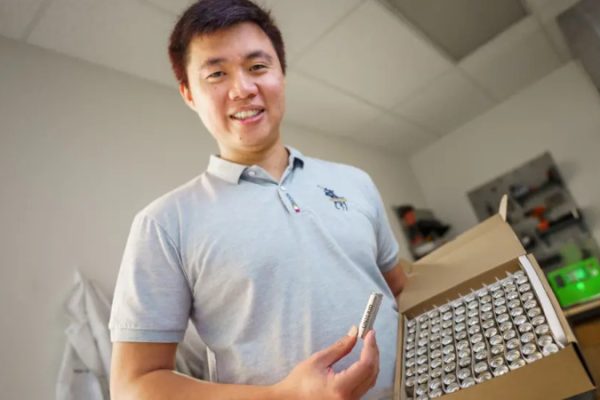
- Why Battery Development Still Takes Years And How AI Could Change That
- Scientists Grow A Bacteria-made “living” Supermaterial That Could Replace Plastic
- Chinese Scientists Develop Wearable Robot To Help Children With Severe Muscular Atrophy
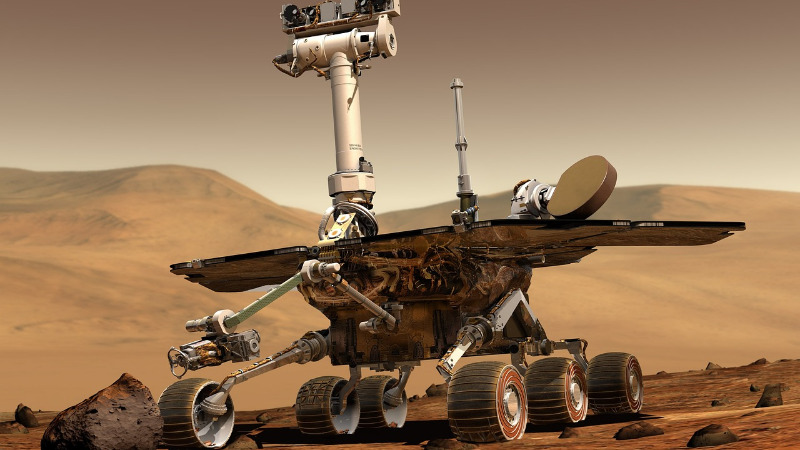
- Will Future Mars Settlers Be Able To 3D-print Their Own Tools?
Hardware Business News
Lunar Outpost Raises $30m For Off-planet Robotic Workforce
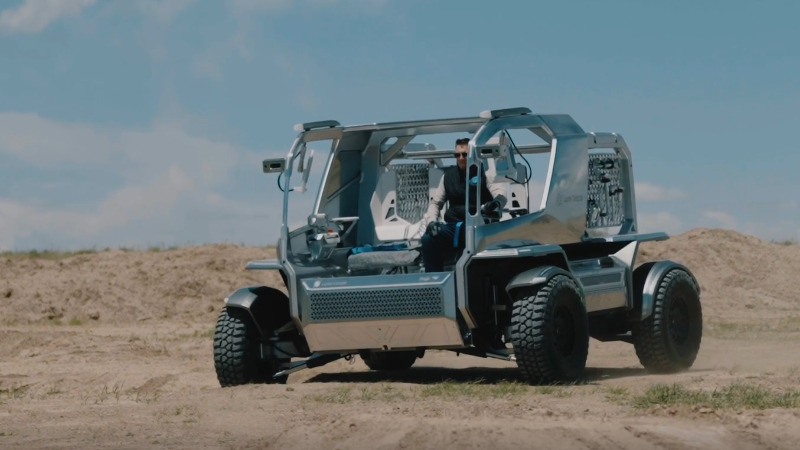
The recent $30 million Series B investment in Lunar Outpost signals a strong growing momentum for space infrastructure, with a focus on autonomous robotics for lunar resource extraction. Their emphasis on scalable, repeatable deployment noteworthy, especially when given their track record of commercial lunar missions and revenue growth. Furthermore, their commitment to robust mobility platforms and autonomous software suggests practical steps toward a sustainable space economy, and it will be interesting to watch how these technologies shape the landscape as plans for lunar bases advance.
AI May Be Destroying Jobs In India
While AI is reshaping software engineering in India, its effect is less about outright job loss and more about changing how engineers work. Industry leaders like Jeff Bezos view AI as a productivity boost, yet firms such as Anthropic caution that automation could reduce entry-level roles and impact long-term skill growth. For India’s large tech workforce, this shift may drive demand for engineers who can supervise AI systems, design solutions, and adapt quickly. Personally, I see this as a key moment for AI, where those who blend technical depth with adaptability will find new opportunities as the landscape evolves.
Robotics CEO Vows No Intervention In Humanoids’ Viral Trial Run
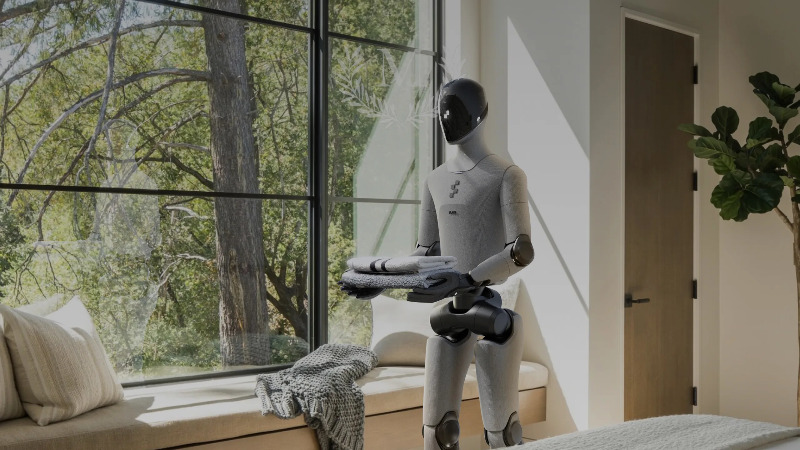
Figure AI’s recent claim that its humanoid robots sorted nearly 60,000 packages autonomously over 50 hours is an impressive development in robotics, particularly as the demonstration drew considerable public attention. Running onboard Helix 02 software with no human teleoperation, these robots managed human-speed processing and self-directed battery swaps. As Figure ramps up manufacturing, their in-house approach to both hardware and AI stands out, although scaling data and production remain key hurdles.
How Chinese Automotive Suppliers Are Driving 3D Printing Innovation
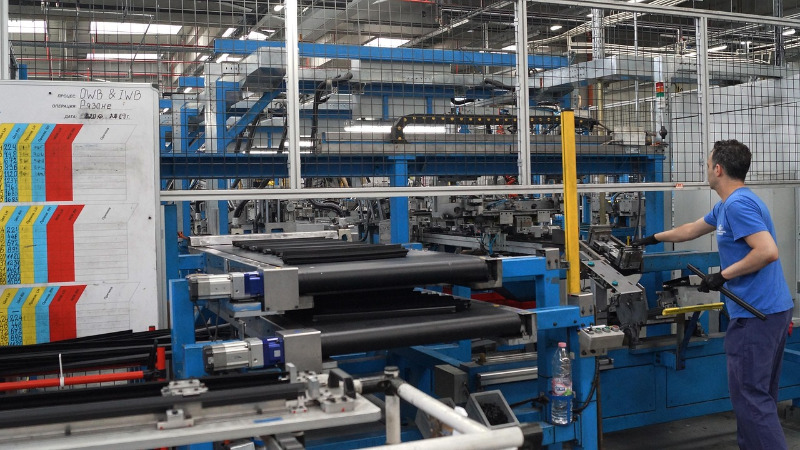
Chinese automotive suppliers are quietly leading the charge in 3D printing innovation, and their impact on the industry is hard to ignore. Leveraging advanced manufacturing infrastructure and significant investment in R&D, these suppliers enable faster prototyping, efficient low-volume production, and the creation of lightweight vehicle components. Furthermore, their pragmatic approach,focused on cost reduction and production flexibility, makes China a strong driver for global competitiveness. While it’s clear that 3D printing is transforming automotive manufacturing, the scale and adaptability of Chinese suppliers could keep them at the forefront for years to come.
Hardware Engineering News
China Is Building A Great Wall Of Undersea Sensors To Track U.S Nuclear Submarines In Indo-Pacific

China’s construction of a layered undersea sensor network in the Pacific is reshaping submarine operations in the region, as it threatens to erode the stealth advantage long relied upon by U.S. and allied submarines. By integrating seabed observatories, satellite clusters, and AI-driven data management, China is pursuing persistent surveillance across key maritime chokepoints. From an engineering perspective, fusing multiple sensor modalities at this scale is a significant technical undertaking, and while the full operational impact remains to be seen, such capability could redefine undersea deterrence dynamics for years to come.
Vulnerability Could Compromise Plant Floor Robotics

A critical vulnerability in Universal Robots’ PolyScope 5 system has drawn attention to the real risks posed by insecure industrial robotics. The flaw, CVE-2026-8153, could allow remote code execution if an attacker accesses the Dashboard Server port, though this requires both the server to be enabled and reachable. While most installations are not directly internet-facing, it’s a strong reminder that segmentation and patching remain essential. Engineers should always treat robots as fully networked assets, never just appliances, and doing so is absolutely necessary for both safety and operational continuity.
Why Battery Development Still Takes Years And How AI Could Change That

Battery development remains a lengthy process, largely because the materials space is so vast and dependent on physical testing, yet AI is beginning to reshape this landscape. By enabling teams to screen materials computationally and predict promising candidates, AI can reduce low-value experiments and optimize for complex trade-offs. While this will not eliminate the need for rigorous lab validation, it could meaningfully shorten development cycles. In my experience, adopting AI in hardware design demands cautious optimism, as the true benefits appear when data-driven insights complement,not replace,hands-on engineering diligence.
Hardware R&D News
Scientists Grow A Bacteria-made “living” Supermaterial That Could Replace Plastic

A new development in bacteria-grown cellulose materials could redefine how we address plastic pollution, as researchers at Rice University and the University of Houston have engineered a strong, flexible, and biodegradable “supermaterial.” By aligning cellulose nanofibres using a rotating bioreactor and incorporating boron nitride nanosheets, the team achieved performance on par with metals and glass, yet with the benefits of renewability and energy efficiency. While scaling and cost challenges remain, this work signals a promising direction for sustainable materials, and I am particularly interested to see how such innovations progress towards industrial adoption.
Chinese Scientists Develop Wearable Robot To Help Children With Severe Muscular Atrophy

A lightweight wearable robot designed by Chinese researchers could mark a new chapter for children facing severe muscular atrophy. The 96-gram device, worn at the knee, doesn’t move limbs for the user but instead applies tailored resistance, aiming to stimulate muscle and nerve recovery. Early clinical trials suggest tangible benefits, as several children reportedly regained enough muscle to stand unaided. While it’s early days, this approach stands out for its focus on reactivating natural movement pathways rather than providing direct mechanical assistance.
Open-Source Hardware News
Will Future Mars Settlers Be Able To 3D-print Their Own Tools?

The idea of 3D-printing tools on Mars is moving from speculation to practical research, as demonstrated by Zane Mebruer’s recent study. By investigating metal 3D printing under Mars-like carbon dioxide conditions, Mebruer found that while argon still yields the best results, CO?-based printing is promising and outperforms printing in ordinary air. Reducing dependence on imported materials like argon could make future Mars missions more self-sufficient, and the incremental advances like this are particularly encouraging for the open-source hardware community.