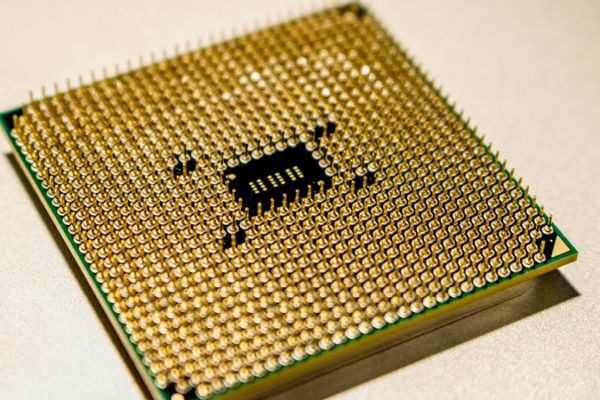
For most of modern technological history, hardware development has been dominated by closed and proprietary design practices. Schematics are hidden, firmware is locked down, and manufacturing details are treated as closely guarded trade secrets. While this model has enabled many foundational technologies by protecting investment and encouraging commercial risk-taking, its limitations are becoming increasingly visible. Repairability is declining, product lifespans are shortening, and innovation is often constrained by legal rather than technical barriers.
So in this article, we explore the challenges of closed-source hardware, examine how open-source software reshaped the technology landscape, and consider whether similar principles can realistically be applied to physical systems as engineering becomes more complex and interconnected.

The Challenges With Closed-Source Hardware
For the vast majority of modern technological history, closed-source hardware has been the dominant model. From the earliest industrial machinery to contemporary microprocessors, engineering knowledge has typically been treated as proprietary. Schematics, manufacturing processes, firmware, and even component-level details are routinely withheld from public view. This approach did not emerge by accident, though. Engineers and companies have long developed techniques to prevent reverse engineering, protect trade secrets, and use legal frameworks such as patents, copyrights, and licensing agreements to prevent copying or unauthorized reuse of their work.
Now there are perfectly legitimate and logical reasons for this model, as developing new hardware is expensive, time-consuming, and risky. Research, prototyping, testing, tooling, certification, and manufacturing infrastructure also all require significant upfront investment. Thus, legal protections allow those who take these risks to secure a period of exclusivity, during which they can recoup costs and generate profit. Without some form of protection, competitors could simply copy successful designs, undercut pricing, and eliminate the incentive to innovate in the first place. Many foundational technologies, including the laser, the transistor, and modern semiconductor fabrication processes, were developed under closed and highly protected environments. In this sense, closed-source engineering has been instrumental in enabling large-scale technological progress.
However, these same protections introduce a number of structural challenges that become more pronounced as technologies mature. One recurring issue is the tendency for patents and proprietary control to be used defensively rather than constructively. When new hardware technologies are developed, it is common for companies to sit on patents without actively advancing the underlying ideas. This prevents others from building upon the technology, even when the original patent holder has no intention of further development. Innovation becomes gated not by technical difficulty, but by legal barriers.
The history of consumer 3D printing is a classic example that illustrates this problem clearly. For years, a web of active patents limited what designs could be openly produced and sold. While progress did occur, much of it was fragmented or artificially constrained. But once key patents expired, innovation accelerated rapidly. Open designs improved, costs fell, and performance increased at a pace that had previously been impossible. It is difficult to avoid the conclusion that, without those restrictions, the technology could have reached its current level far earlier.
Beyond patent stagnation, closed-source hardware also limits broader innovation by narrowing participation. When only a small group has access to design details, experimentation becomes centralized. Independent engineers, researchers, and smaller companies are excluded from meaningful contribution. This reduces the diversity of ideas and slows the rate at which weaknesses are discovered and improvements are made. Over time, this has a compounding effect. Slower innovation at one layer of technology makes it harder to introduce the next generation built on top of it.
Life cycle management presents another serious challenge. Closed-source hardware is tightly coupled to the continued involvement of the original manufacturer. When a product reaches end of life, documentation often disappears, spare parts stop being produced, and firmware updates cease. Maintaining or repairing such hardware becomes increasingly difficult, even when the physical components themselves remain functional. In many cases, critical parts are still under patent protection, preventing third parties from legally manufacturing replacements. Perfectly serviceable equipment is discarded, not due to technical failure, but because repair has been made impractical or illegal.
This dynamic also enables monopolistic behavior. A single company may control not only the production of new hardware, but also who is permitted to repair or service older devices. Repair restrictions, proprietary tools, and locked firmware allow prices to be set arbitrarily, with little competitive pressure. Users are left dependent on the original vendor, regardless of cost or service quality.
Closed-source engineering has undeniably played a critical role in technological development. At the same time, its limitations become increasingly apparent as systems grow more complex and interconnected. These challenges raise important questions about how engineering knowledge should be protected, shared, and sustained in the long term, especially in an era where innovation depends as much on collaboration as it does on competition.
The Rise of Open-Source Software
The rise of open-source software has been one of the biggest changes in the field of technology. Unlike closed-source software which is proprietary and kept private by its developers, open-source software is free for anyone to use, modify, and in some cases, even redistribute.
This freedom has led to massive benefits in the industry as anyone around the world who requires a piece of software can not only use it without needing to pay any license or royalty fees, but in many cases, modify the code to better suit their needs. The introduction of the Linux kernel is an excellent example of how open-source software can be massively beneficial to the industry.
Before Linux, operating systems were generally controlled by a handful of companies (such as Microsoft and Apple), and these companies would charge for licenses and royalties on those licenses. Furthermore, these companies would also control what features made it into the final release, and this could see customers stuck with operating environments that did not meet their requirements.
However, the introduction of the Linux kernel changed all of this. Instead of trying to create an operating system from scratch, users could utilize the Linux kernel which was free from charge, and add whatever extra features they needed. In fact, it was possible for users to create their own Linux distributions that included custom tools and interfaces or offer commercial support and services around them.
Fast forward to today, and a large majority of servers worldwide run Linux, whether it is Ubuntu, Red Hat, or Debian. Furthermore, virtually all supercomputers run Linux as it provides users with a platform that is free from charge, easy to customize, and highly secure.
The open-source nature of Linux means that anyone around the world can look through the code for bugs and vulnerabilities, and report them to the public domain. From there, fixes can be provided by other programmers that are then integrated into the main code repository so that everyone around the world is protected. Thus, the security of Linux is not just dependent on the original developers, but the entire community of Linux users around the world.
Finally, the use of open-source software accelerates innovation as anyone around the world can take pre-existing projects and build on top of them. For example, a programmer in the UK could create a new GPIO library that improves performance, and this code is contributed to the main repository. A user in the US can combine this library with their own modifications, and this is also submitted to the main repository.
What is Open Source Hardware?
So far, the vast majority of open-source projects have been software, and this makes sense as software is purely digital. Unlike hardware, software doesn’t incur per-unit manufacturing costs, it can be trivially copied, shared, and improved. However, when it comes to open-source hardware, things are very different.
In fact, trying to define what open-source hardware actually is can be tricky to do. Some would say that open-source hardware is the release of all design files regardless of whether they allow commercial use or not. Others would say that only designs which allow for anyone to purchase the parts and build the design themselves can be called open-source.
For example, a simple LED camera flash system can be designed with specific ICs that may only be available from one manufacturer, and this could be released under an open-source license. But unless those ICs can be purchased by anyone (for example, being available for purchase through common distributors), then the design could be argued as not being truly open-source. The same applies to other components; if the PCB requires specialized fabrication unavailable to the public, then how can that design be called open-source?
Another example would be a product that uses a custom FPGA whose pinout and functionality is released, but the FPGA itself is not commercially available. Does this mean that the design cannot be called open-source?
To make matters more complicated, even if a design is released as open-source, a user still has to pay for the parts. This means that there is still a financial barrier to entry, and this is something that software typically doesn’t suffer from in the same way. Thus, we can see that the term “open-source” is somewhat subjective, and what one person considers open-source may not be considered as such by someone else.
Why is open source hardware needed?
As we approach 2026, it is truly amazing to see just how far technology has come. What started out as simple calculators that could perform basic arithmetic have now become computers that can recognise faces, understand natural language, and even have a sense of humour.
Of course, there are those who would say that the economy is failing, the cost of living is rising, and that the weather is getting worse, but when looking at the technological advances that have been made over the past few years, it is hard not to feel optimistic for the future.
Having said that, there are those who believe that modern hardware design is fundamentally wrong, and that entering a new era should come with new design concepts. Furthermore, the introduction of AI has seen many thousands of people lose their jobs, the nature of work is starting to change, and mass production is becoming more important than ever.
In fact, we are actively seeing devices manufactured by big names such as Apple and Samsung becoming more difficult to repair, spare parts are becoming harder to obtain, and with so many security vulnerabilities being discovered, it seems that hardware designs are only getting worse. If there is one area of life that has been particularly affected by closed-source hardware, it’s innovation.
A classic example of this is the iPhone. Undoubtedly the engineers at Apple have made numerous improvements to the tech, which cannot be disagreed with. However, it such a product was made open source, it begs the question “would the iPhone be better?”
Finally, as manufacturing becomes more cloud-based, it could very well be that in the near future, factories shift away from mass production and move towards unique production orders.
This may sound like Sci-Fi, but the development of standardised practices and component selection combined with open-source designs could very well allow individuals to order custom hardware on the fly. Such a system would also allow for individuals to make modifications as needed, thereby preventing individuals from being forced into the same product line as everyone else. For example, those from poorer areas could make vital open-source medical equipment, simplified for their needs and budget.
Conclusion
The conclusion to this article is very simple; open-source hardware is something that is nowhere near established. But, if we can help provide some benefits to it with our services, then we will certainly support it where we can.
The idea of open-source hardware is something that could massively help humanity in the long run way beyond the basic need for consumerism. Open-source hardware could provide the world with cheaper medical devices, improve lives, and even help to reduce the environmental impact of production by reducing reliance on mass production. Of course, open-source hardware still needs to be standardized, and there are many discussions to be had, but this is something that we often think about here at Ponoko, and who knows, maybe there is a future in open-source hardware for us.