A new AI wearable from two ex-Apple Vision Pro engineers is drawing attention for its privacy-first approach, activating only when tapped rather than constantly listening. Inspired by the iPod Shuffle, its familiar, minimalist design intentionally avoids the pitfalls of always-on competitors. As the AI wearable market faces skepticism over privacy and usefulness, this device takes a more deliberate stance, offering control without demanding constant trust. Personally, I see this as a thoughtful step, since practical privacy is often overlooked in pursuit of convenience, and a clear on-off interaction could help rebuild user confidence.
Top Stories This Week
- Ex-Apple Engineers Launch Privacy-First AI Wearable
- SpaceX Claims Amazon Leo Launches Raise Collision Risks
- Washington State Enacts Law Regulating AI Companion Chatbots With Private Right Of Action
- How UPS Is Using AI, From Shipper Pricing To Customs Clearance
- Proposed Ban On Big Data Centers In Ohio Clears Hurdle, With A Ways To Go
- Cloudflare Launches AI Rebuild Of WordPress CMS
- Setting The Rules For Robots In Public Spaces
- MedStar Health Spine Surgeons Surpass 1000 Robotic Spine Procedures At MedStar Union Memorial Hospital
- Tiny Living Robots Now Use Neurons To Guide Movement And Behavior
- How SimBioSys Uses AI To Bring 3D Precision To Breast Cancer Surgery
- Aegis – A Fully Open-source FPGA
Hardware Business News
SpaceX Claims Amazon Leo Launches Raise Collision Risks

The ongoing dispute between SpaceX and Amazon Leo over satellite deployment strategies highlights how regulatory maneuvers can shape industry dynamics as much as technical achievements can. SpaceX claims Amazon Leo’s recent launches have increased collision risks by exceeding approved orbital altitudes, while Amazon Leo maintains it is operating within established safety standards and has sought independent verification. Given both companies’ ambitions and the scale at which they operate, such contention seems inevitable, and from an engineering perspective, it shows the importance of precise coordination in increasingly crowded orbits.
Washington State Enacts Law Regulating AI Companion Chatbots With Private Right Of Action

Washington’s new law on AI companion chatbots marks a major shift in the law as it introduces both disclosures and protections for users, especially minors. By requiring clear identification of chatbots and mandating safety protocols around mental health, the Act addresses real concerns in a fast-evolving field. I find it notable that individuals can directly take action under this law, which could influence industry compliance strategies. These requirements seem thoughtfully targeted, and as someone who values balanced regulation, I see this as a positive approach to emerging AI risks without stifling innovation.
How UPS Is Using AI, From Shipper Pricing To Customs Clearance

UPS is doubling down on AI to streamline everything from customs clearance to pricing strategies, while investing heavily in employee upskilling. By integrating technologies like Agentic AI and digital twins, they’re addressing rising complexity in global trade and shifting customer demands. From an engineering perspective, their approach is measured yet forward-thinking, especially as they balance automation with comprehensive staff training. For an industry so dependent on reliability, the emphasis on data quality and human expertise seems like a practical path forward, and I’ll be interested to see how this shapes competition among major carriers.
Proposed Ban On Big Data Centers In Ohio Clears Hurdle, With A Ways To Go

Efforts to ban large-scale data centers in Ohio have reached a new stage, as a proposed constitutional amendment passed its first ballot board review. Residents behind the measure face a steep challenge, needing over 413,000 signatures by July 1, yet their motivation appears strong given concerns about land use and resource consumption. While data centers bring significant tax revenue, the pushback highlights ongoing tensions between technological growth and local priorities.
Hardware Engineering News
Cloudflare Launches AI Rebuild Of WordPress CMS

Cloudflare’s recent launch of EmDash CMS caught my attention like a moth to a flame, as it aims to tackle longstanding security concerns with WordPress by reimagining the platform using AI and modern frameworks like TypeScript and Astro. The serverless approach, combined with default Passkey authentication and an innovative payment layer, suggests a shift toward more efficient and secure web hosting. While WordPress remains highly versatile, EmDash’s technical choices highlight how established tools can be fundamentally reworked, and I’m interested to see how these features perform in real-world deployments.
Setting The Rules For Robots In Public Spaces

Robots are leaving controlled environments and entering our daily lives, but the rules governing their behavior in public spaces are lagging behind. A recent report highlights that as delivery robots and robotaxis become more common, inconsistent regulations and unclear responsibilities are slowing progress. While the underlying hardware is maturing rapidly, it’s the governance and public trust that will ultimately decide how widely these machines are accepted. Engineers and policymakers alike will need to collaborate closely if we want to see robotics achieve meaningful, scalable integration into society.
MedStar Health Spine Surgeons Surpass 1000 Robotic Spine Procedures At MedStar Union Memorial Hospital
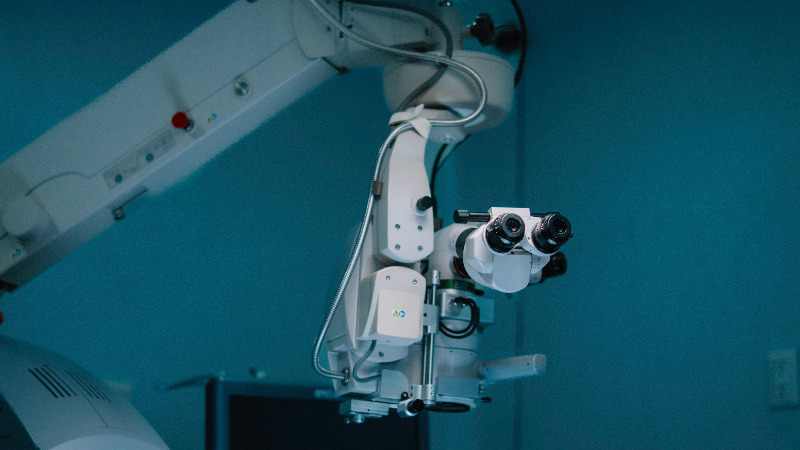
Robotic-assisted spine surgery at MedStar Union Memorial Hospital has now surpassed 1,000 procedures, a figure that highlights both technological progress and the value of surgeon experience. Using systems like ExcelsiusGPS, surgeons have achieved greater precision and control, which can translate to smaller incisions, less tissue disruption, and potentially faster recovery for patients. While the numbers are impressive, the real impact lies in how advanced hardware, paired with skilled hands, continues to set new standards in surgical care,a development I see as a meaningful evolution in medical device application.
Hardware R&D News
Tiny Living Robots Now Use Neurons To Guide Movement And Behavior

Living robots have now crossed a new threshold, as researchers have equipped them with functional nervous systems built entirely from frog cells. While previous biohybrid machines could move, these so-called neurobots display more complex behaviors and movement patterns, thanks to self-organizing neurons that actively influence their actions. It’s striking to see living robotics approach a level of internal coordination typically reserved for animals, suggesting broader possibilities for understanding biological integration. The interplay between neural control and morphology is intriguing, though much about the underlying mechanisms remains to be unraveled.
How SimBioSys Uses AI To Bring 3D Precision To Breast Cancer Surgery

AI-driven 3D modeling is quietly reshaping breast cancer surgery, as SimBioSys applies NVIDIA-powered visualization to help surgeons interpret tumors with new clarity. Their TumorSight Viz system transforms ordinary MRIs into interactive, spatially accurate models, supporting more precise planning and potentially reducing unnecessary tissue removal. The integration of GPU-accelerated segmentation into clinical workflows is a major technical achievement, and further refinement of these models may very well improve surgical outcomes as validation studies progress.
Open-Source Hardware News
Aegis – A Fully Open-source FPGA

Open-source hardware enthusiasts will likely find Aegis noteworthy, as it delivers a fully open-source FPGA platform covering every stage from architecture to silicon. Unlike earlier projects that focused on isolated elements, Aegis integrates the entire workflow, including synthesis, bitstream generation, and tapeout. This level of openness could encourage broader experimentation and transparency in FPGA design, which is something I consider vital for both education and innovation. The use of standard tiles and compatibility with open PDKs also suggests practical accessibility for both the community and small teams.