Despite the constant headlines about AI transforming industries, recent data suggests its impact on employment and productivity is minimal so far. Most CEOs report little to no change, echoing the productivity paradox economists noted with earlier tech revolutions. While expectations for future gains remain, it’s clear that adoption alone isn’t a guarantee of results, and that AI is clearly not always the solution to growing a business.
Top Stories This Week
- CEOs Admit That AI Has Minimal Impact On Employment Or Productivity
- Google And Pentagon In Talks To Run Custom AI Chips Inside Classified Environments
- Italy’s Wearable Robotics Raises €5 Million In Series A
- Nuclear Reactor Restart In Japan Will Likely Displace Natural Gas Electricity Generation
- Neptune Robotics Invests US$12mn In New Singapore Factory To Drive Five-Fold Increase In Autonomous Ship Hull Cleanings
- Think AI Knows What It’s Doing? Scientists Say Think Again
- Ukraine Sends Machines Into The Battlefield In Place Of Human Soldiers
- Singapore’s LTA To Build Country’s First 3D Printed Concrete Pedestrian Bridge
- 3D Printing Is Now Possible Inside Living Cells
- Researchers Find A Way To Heat 3D Printer Filament Using Microwaves
- Infineon Aims To Reshape Automotive Chip Ecosystem With RISC-V
Hardware Business News
Google And Pentagon In Talks To Run Custom AI Chips Inside Classified Environments

Google’s ongoing talks with the Pentagon could mark a major shift in classified cloud infrastructure, as discussions focus on bringing GPU racks and Google’s custom TPUs into secure environments for the first time. From my perspective, enabling TPUs for classified workloads feels like a logical, if not overdue, step, since these accelerators already power much of Google’s commercial AI. While Google trails AWS and Microsoft in both public and classified cloud adoption, securing this deal would bolster its defense portfolio and address a notable infrastructure gap in classified AI deployment. I’ll be watching closely to see how the technical and policy negotiations evolve.
Italy’s Wearable Robotics Raises €5 Million In Series A
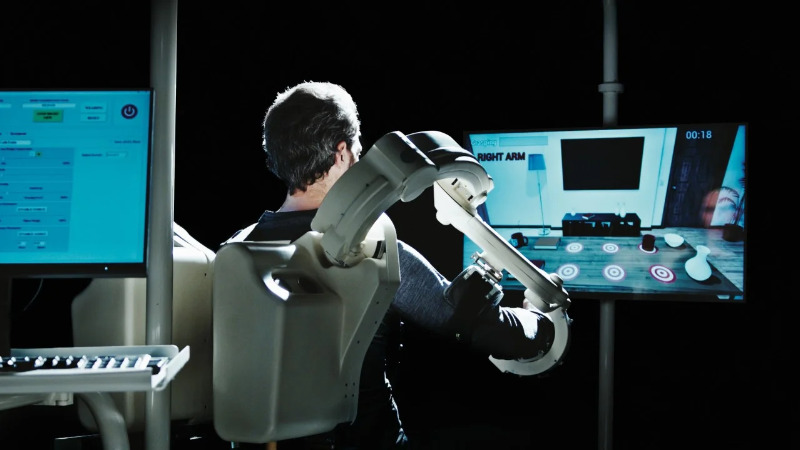
Wearable Robotics, an Italian startup focused on neuromotor rehabilitation, has secured €5 million in Series A funding to enhance its portfolio and expand internationally. With over 50 ALEX RS devices already installed worldwide, this move shows the serious intent to scale both product innovation and commercial reach. The leadership’s emphasis on modular, advanced solutions aligns with broader trends in rehabilitation technology, and is a practical step for strengthening Italy’s footprint in a growing global sector.
Nuclear Reactor Restart In Japan Will Likely Displace Natural Gas Electricity Generation

Japan’s decision to restart Kashiwazaki-Kariwa Unit 6, its largest nuclear reactor, marks an interesting shift in the country’s energy strategy. This move should reduce reliance on imported liquefied natural gas, given that nuclear output is projected to displace around 1.3 million tons of LNG annually. From an engineering and business standpoint, diversifying the energy mix in this way can massively improve energy security, though reaching the 2040 target of 20% nuclear generation will require significant ongoing commitment and careful management.
Neptune Robotics Invests US$12mn In New Singapore Factory To Drive Five-Fold Increase In Autonomous Ship Hull Cleanings

Neptune Robotics’ US$12 million investment in a new Singapore facility shows a calculated move to expand its foothold in autonomous ship hull cleaning. With this addition, the company aims to boost local capacity five-fold by 2027 while advancing proprietary AI and robotics for round-the-clock operations. For an industry facing increased pressure over emissions and fuel costs, this scaling of automated maintenance has the potential to offer very real benefits. The integration of AI with real-world marine challenges also stands out to me as a practical response to the ever evolving demands in global shipping.
Hardware Engineering News
Think AI Knows What It’s Doing? Scientists Say Think Again

It’s easy to slip into saying AI “knows” or “understands,” yet recent research shows news writers rarely use such human-like language for AI. I find this somewhat reassuring and a bit surprising, given how often we anthropomorphize tech in conversation. The study suggests editorial standards when talking about AI shape this cautious approach, and that context is key. As engineers, we should be deliberate with language, since even subtle word choices can influence how others perceive AI’s abilities and the human work behind them.
Ukraine Sends Machines Into The Battlefield In Place Of Human Soldiers
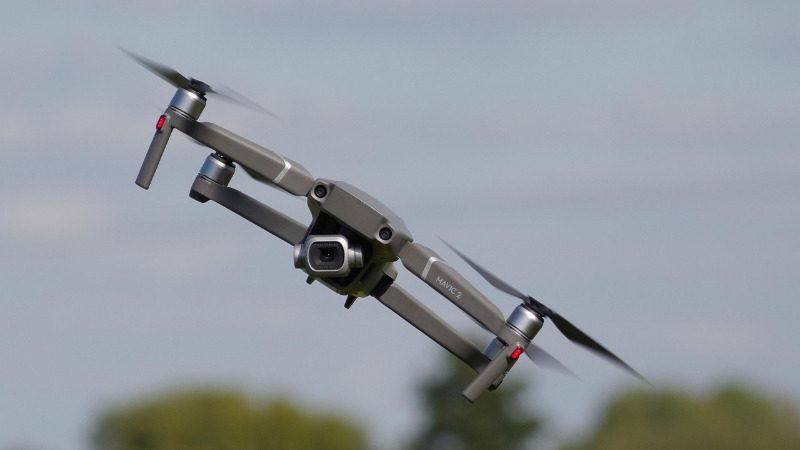
It’s rare to see battlefield robots move from concept to daily deployment, yet Ukraine’s integration of land drones and robotic systems has reached that point. These machines now handle tasks ranging from casualty evacuation to direct combat, with reports suggesting entire positions have been taken without infantry. While the long-term impact remains to be seen, the technical achievements are significant, especially considering the harsh operational demands.
Singapore’s LTA To Build Country’s First 3D Printed Concrete Pedestrian Bridge

Singapore’s first 3D printed concrete pedestrian bridge is set to span the Jurong River by 2028, connecting Jurong West and Tengah. Developed by the Land Transport Authority with NTU and industry partners, the 10-meter structure uses segmented concrete and post-tensioned steel cables, aiming to halve manpower needs and speed up segment production. While still at a pilot stage, the initial testing appears thorough, and the measured approach to validating performance demonstrates a practical path for integrating new fabrication techniques in public infrastructure.
Hardware R&D News
3D Printing Is Now Possible Inside Living Cells
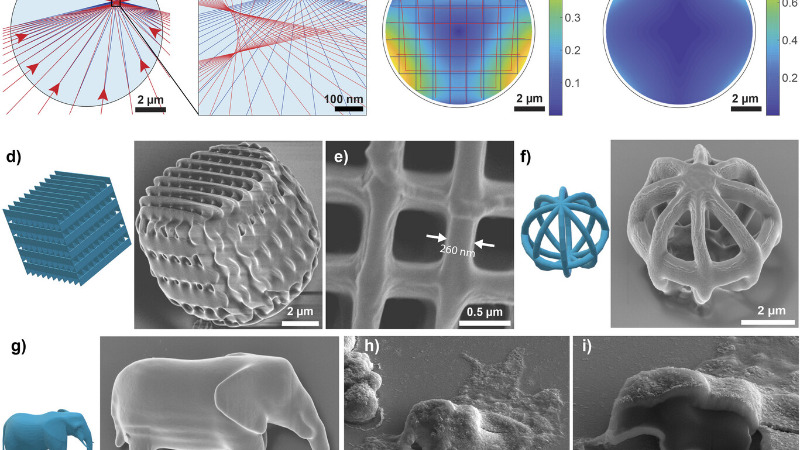
The ability to 3D print intricate structures directly inside living cells is now a reality, as researchers have just demonstrated with objects like barcodes and microlasers. Using two-photon polymerization and a specially formulated resin, the team achieved nanoscale precision without harming the cells’ natural functions. While practical applications such as cell tagging and internal sensing look promising, it’s prudent to note that biocompatibility challenges remain. This development, though early, could significantly expand the toolkit for cellular engineering and opens intriguing new avenues for studying and manipulating cells from within.
Researchers Find A Way To Heat 3D Printer Filament Using Microwaves
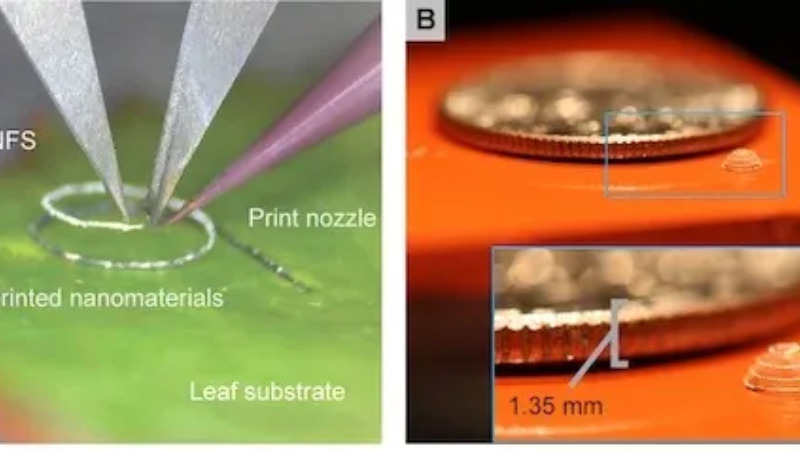
Heating 3D printer filament with microwaves, as demonstrated by Rice University’s Meta-NFS process, marks a new technological advance in additive manufacturing. This technique enables pinpoint heating within printed objects, paving the way for embedding circuits in ways that standard methods have struggled to achieve. I find the ability to heat internal layers without damaging exteriors brilliant as it could very well open up new pathways for integrating electronics into soft or unconventional substrates.
Open-Source Hardware News
Infineon Aims To Reshape Automotive Chip Ecosystem With RISC-V
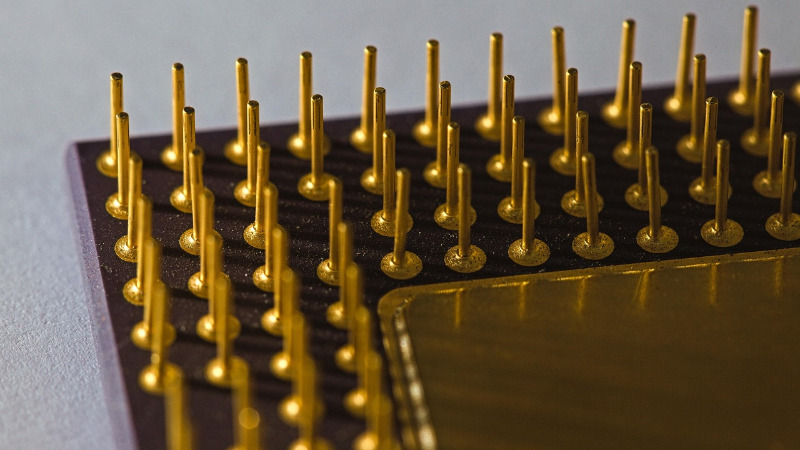
Infineon’s recent move to restructure its automotive microcontroller lineup around RISC-V perfectly demonstrates their desire to support open hardware solutions. By transitioning from ARM to an open standard ISA, Infineon is aiming to give OEMs greater flexibility and reduce vendor lock-in, which could increase both efficiency and security. It’s notable that their approach emphasizes modularity and collaboration, with claims of faster development cycles and scalable solutions. While it remains to be seen how quickly the automotive ecosystem will adapt, this step aligns with the growing trend of software-defined vehicles and open-source hardware principles.