
Intel may soon find itself with a rather unusual partner, the US government. Talks are underway for Washington to take a 10% stake in the chipmaker, a move tied to national security and America’s push for semiconductor independence. While it’s rare to see government equity in a healthy company, I can see the logic: Intel’s ability to manufacture advanced chips on home soil is strategically vital. For engineers like us, this signals just how central semiconductors have become in geopolitics. And when Intel gets a boost, the entire hardware ecosystem pays attention.
Top Stories This Week
- US In Talks Over 10% Intel Stake, White House Confirms
- Intel Demonstrates Cutting-edge 18A Process For Non-x86 SoCs, Aiming To Challenge TSMC
- University Of Wyoming Lab Pushes Boundaries Of Soft Material 3D Printing
- US EV Battery Breakthrough To Cut Energy Use By Half, Shrink Factory Footprint
- University Of Arizona Awarded $5M To Advance AM For Defense
- Multipurpose Robots Take Shape
- Accelerating Hardware Development To Improve National Security And Innovation
- NASA’s GRX-810 3D Printing Alloy Moves From Lab To Real Hardware
- MIT’s New 3D Printed Implant Could Prevent Dangerous Blood Sugar Crashes
- Cybosense And SenseGlove Collaborate On New 3D Printed Smart Gloves
- China’s DeepSeek Quietly Releases An Open-source Rival To GPT-5—optimized For Chinese Chips And Priced To Undercut OpenAI
Hardware Business News
Intel Demonstrates Cutting-edge 18A Process For Non-x86 SoCs, Aiming To Challenge TSMC
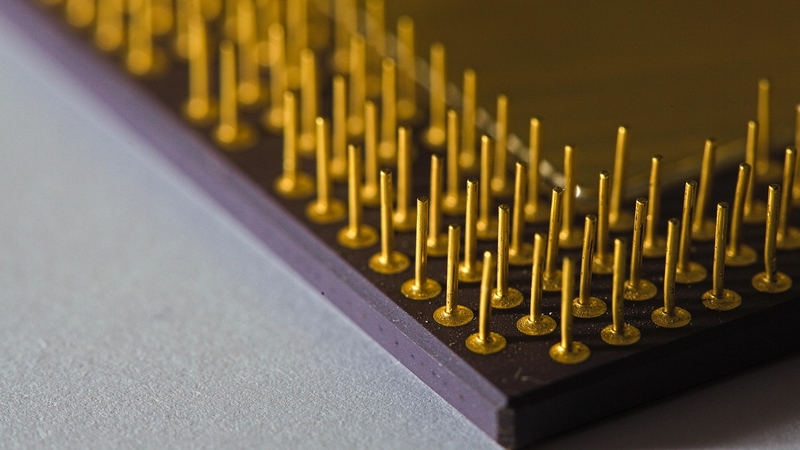
This week, Intel launched a demo that demonstrated a non-x86 SoC on its 18A process, which showed that Intel is no longer limiting its most advanced node to its own CPUs. Seeing workloads like 3D gaming and 4K streaming running live makes one thing clear: 18A is being positioned to rival TSMC head-on, across ARM, RISC-V, and beyond. Such a move is particularly exciting because it means Intel could become a genuine foundry option for fabless giants, and that’s a future where design freedom and competition both thrive.
University Of Wyoming Lab Pushes Boundaries Of Soft Material 3D Printing

Soft materials are notoriously tricky to print, yet the University of Wyoming is taking bold steps to change that. Daniel Rau’s lab is exploring how elastomers, rubber-like, flexible materials, can be shaped with 3D printing to unlock applications from safer helmets to medical implants. What I find compelling is the blend of deep science and practical engineering: using X-ray photon correlation spectroscopy to study curing at the nanoscale, while always keeping an eye on real-world impact. It’s early research, but if successful, it could redefine how we think about comfort, safety, and performance in everyday products.
US EV Battery Breakthrough To Cut Energy Use By Half, Shrink Factory Footprint
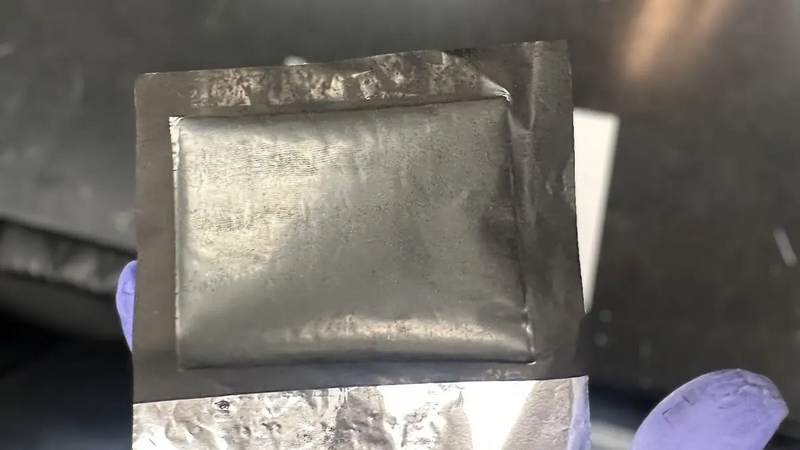
Cutting energy use in half while shrinking factory size is a major leap for EV battery production, and Argonne National Laboratory’s latest review shows how dry electrode processing is the most practical path forward, removing costly solvents and bulky drying ovens from the equation. This development is far more than a lab curiosity; it’s a real chance to bring down costs and improve sustainability in one stroke. If scaled successfully, these methods could redefine how batteries move from research benches to mass-market vehicles.
University Of Arizona Awarded $5M To Advance AM For Defense

Hypersonic flight just got a serious ally in 3D printing. The University of Arizona’s Mach?X team, backed by a $5M Army grant, is combining advanced alloys, additive manufacturing, and machine learning to produce parts that survive five times the speed of sound. What strikes me is the integration of acoustic testing and AI to catch defects mid-print, a level of precision that could transform how we approach extreme aerospace engineering. For those of us in electronics and materials, it’s a reminder that innovation is all about pushing materials and manufacturing to entirely new frontiers.
Hardware Engineering News
Multipurpose Robots Take Shape

Dartmouth’s modular robots are proving that versatility can come in small, cube-shaped packages. Built from blocks combining rigid rods and adjustable strings, these bots can reconfigure themselves into bridges, scaffolds, and even stretchers, all while navigating complex outdoor terrain. What fascinates me is how inspiration from ants meets real-world engineering: tiny deformations in each module translate into complex, cooperative movement.
Accelerating Hardware Development To Improve National Security And Innovation

Nominal, an up and coming startup, is proving that hardware development can be as data-driven as software. Their platform unifies hundreds of test sources from fighter jets, rockets, satellites, and nuclear reactors, letting engineers visualize trends, catch anomalies, and iterate rapidly. This approach borrows continuous integration principles from software, accelerating hardware cycles without sacrificing precision. For anyone in engineering, it’s a glimpse of how complex systems, once slowed by fragmented data, can now be developed faster, smarter, and more collaboratively, ultimately strengthening innovation and U.S. national security in a tangible, measurable way.
NASA’s GRX-810 3D Printing Alloy Moves From Lab To Real Hardware
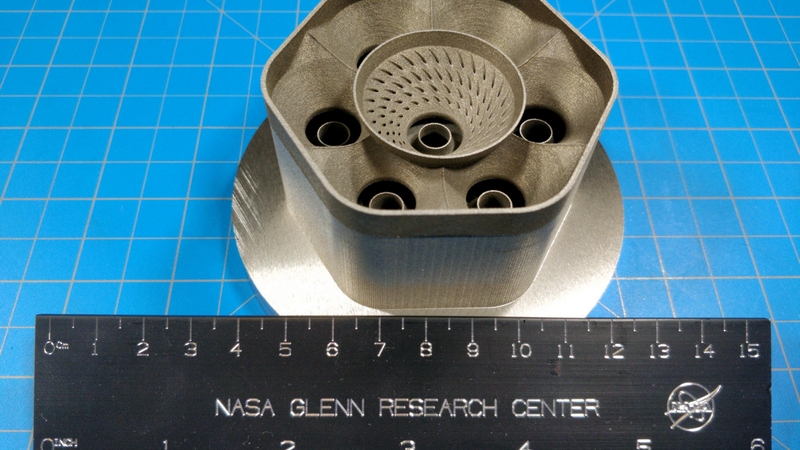
NASA’s GRX-810 alloy is turning extreme heat from a limitation into an opportunity. Designed for 3D printing, it withstands temperatures up to 2,000°F for extended periods, far longer than traditional mid-range alloys, and is now moving from lab-scale tests to industrial production with Elementum 3D. What excites me as an engineer is how the alloy enables complex part geometries, from turbine cooling channels to lattice structures, while keeping costs manageable.
Hardware R&D News
MIT’s New 3D Printed Implant Could Prevent Dangerous Blood Sugar Crashes

MIT’s new 3D printed implant could change how Type 1 diabetes is managed. Coin-sized and trigger-ready, it stores powdered glucagon and releases it on demand via a shape-changing nickel-titanium alloy, with wireless activation, even potentially linked to continuous glucose monitors. This design combines precision engineering with practical medicine to create a compact, reliable, and long-lasting delivery system that could prevent dangerous hypoglycemic episodes. Beyond diabetes, this approach also hints at a future where implants can respond to emergencies in real time, showing how additive manufacturing is moving from prototyping to life-saving medical devices.
Cybosense And SenseGlove Collaborate On New 3D Printed Smart Gloves
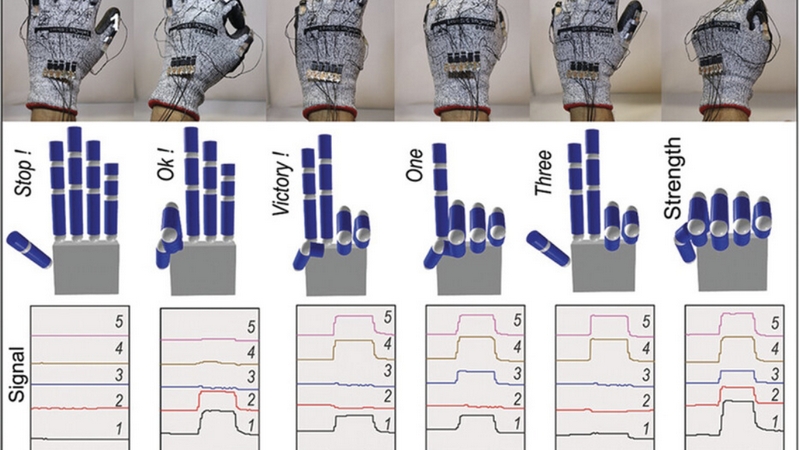
Cybosense and SenseGlove are pushing wearable tech into a new dimension with 3D printed, self-healing smart gloves. By combining Cybosense’s stretchable, bioelectronic, and biosensing materials with SenseGlove’s haptic expertise, these gloves can monitor hand gestures, detect stress or injury, and even repair themselves after damage. What stands out is how this tech isn’t just for VR, but defense, industrial, and space applications could all benefit from real-time health and performance feedback. For engineers, it’s a clear example of how additive manufacturing and advanced materials converge to create devices that are adaptive, resilient, and capable of enhancing human-machine interaction in extreme environments.
Open-Source Hardware News
China’s DeepSeek Quietly Releases An Open-source Rival To GPT-5—optimized For Chinese Chips And Priced To Undercut OpenAI

China’s DeepSeek has quietly released its V3.1 AI model, and I can’t help but admire the engineering behind it, even if the politics raise eyebrows. It matches GPT-5 on some benchmarks and cleverly uses a mixture-of-experts design to save compute power, which is impressive for anyone who loves efficient systems. While the model is tuned for Chinese-made chips, showing resilience against export restrictions, it also reminds me how quickly global competition drives innovation, and we engineers benefit when someone pushes the limits, even if it’s across the Pacific.