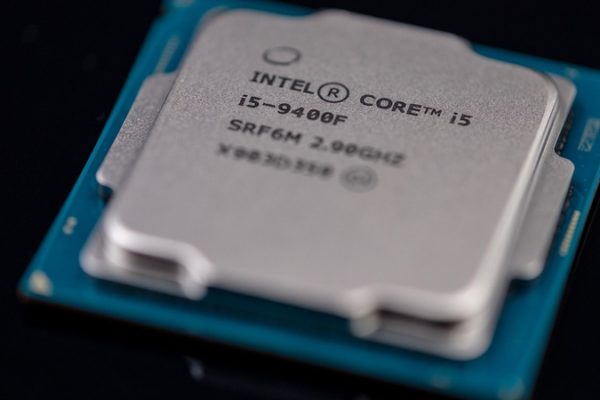
AI-generated hardware Trojans are no longer just theory, and NYU Tandon’s study demonstrates how generative models can embed subtle chip flaws while requiring minimal experience. These findings matter because hardware cannot be patched, yet the exercise also highlights an opportunity: it reinforces the importance of thorough design review and component provenance. While the risks are real, they encourage engineers to anticipate vulnerabilities and build more resilient systems, and this work offers a clear lens on how AI intersects with hardware evolution.
Top Stories This Week
- Researchers Warn AI Can Be Weaponized To Plant Flaws In Computer Chips
- Arm Joins With Open Compute Project To Unveil New Chiplet Standards For AI Data Centers
- OpenAI Collaborates With Arm For New CPU Development
- Lattice Launches New FPGA For Quantum Security
- China Tightens Grip On Critical Minerals, Threatening Electronics Supply
- Australian Construction Robot Charlotte Can 3D Print 2,150-sq-ft Home In One Day
- Tungsten-based SOT-MRAM Achieves Nanosecond Switching And Low-power Data Storage
- Physics-based Machine Learning Could Unlock Better 3D-printed Materials
- Scientists Invent A Way To Grow Metal In 3D Printers
- Mini 3D Printer With Salt-grain-sized Lens Could Build Living Tissue Inside Body
- OpenSFI Is A Very Interesting Collaboration Between AMD & Intel For Better Firmware Unification
Hardware Business News
Arm Joins With Open Compute Project To Unveil New Chiplet Standards For AI Data Centers
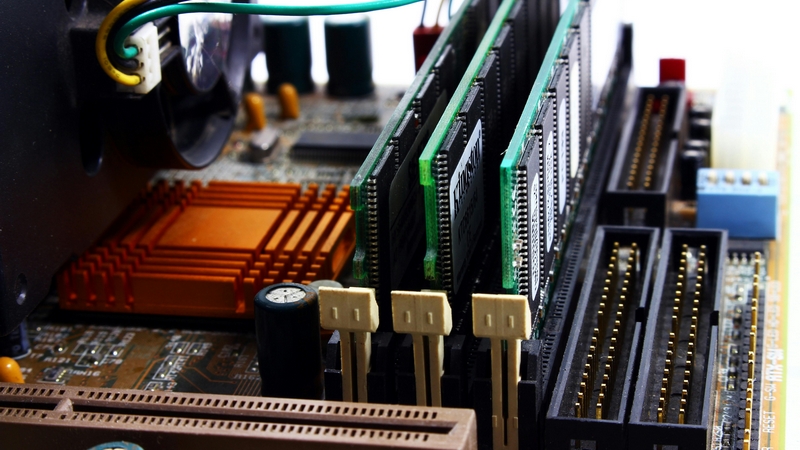
Arm is redefining AI data-center design by promoting chiplet-based SoCs that consolidate compute, memory, and networking into a single package, and this shift promises higher density with lower power draw. By contributing the Foundation Chiplet System Architecture to the Open Compute Project, Arm enables interoperability across vendors, and the expanding Total Design ecosystem accelerates innovation while reducing design complexity. As AI workloads surge, these modular approaches offer practical efficiency gains, and this story illustrates how thoughtful engineering standards can shape the next generation of high-performance, energy-conscious infrastructure.
OpenAI Collaborates With Arm For New CPU Development

OpenAI and Arm are joining forces to develop a CPU to complement a new AI chip built with Broadcom, with TSMC handling manufacturing, and this partnership clearly demonstrates the accelerating pace of AI hardware innovation. Arm’s architecture dominates smartphones and battery-powered devices, and its licensing model allows both customization and efficiency across the industry. Coupled with strong financials and low leverage, Arm is well-positioned to influence next-generation AI infrastructure, and this collaboration offers a clear view of how strategic partnerships and robust design standards can shape both technology and the market.
Lattice Launches New FPGA For Quantum Security
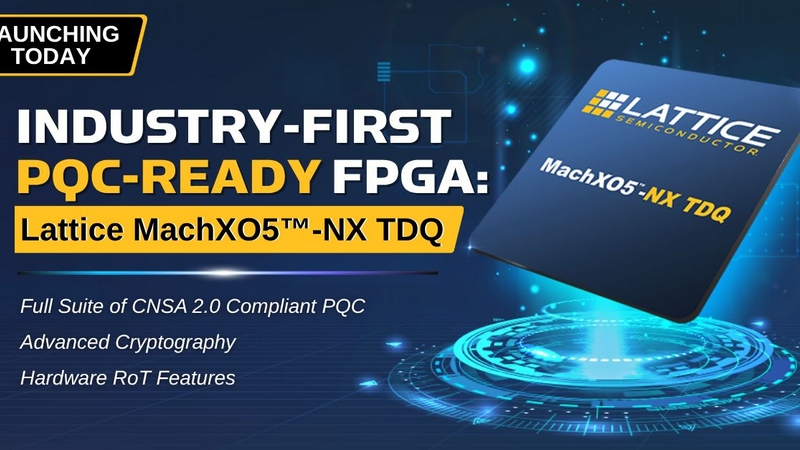
Lattice Semiconductor’s MachXO5-NX TDQ has just introduced the first FPGA platform with full CNSA 2.0-compliant post-quantum cryptography and a built-in hardware Root of Trust, making this a major step in securing next-generation infrastructure. By combining crypto-agility, hybrid classical-PQC algorithms, and advanced key management, it enables resilient system integrity while remaining adaptable to evolving security standards. Its scalable design spans compute, communications, industrial, automotive, and AI datacenter applications, and this launch highlights how FPGA innovation can address quantum-era threats without sacrificing performance or flexibility.
China Tightens Grip On Critical Minerals, Threatening Electronics Supply

China’s expanded rare-earth export restrictions are reshaping the global component landscape, and companies like Yageo and Walsin are already adjusting strategies to secure supply chains. By controlling not just raw materials but technologies and downstream processes, these measures show the strategic value of rare-earth elements for electronics and AI servers all around the world. While alternative sourcing is possible, it requires time-intensive redesigns, making early permits and vertical integration critical advantages. Thus, we are being shown in real-time how a single material class can influence entire industries, offering a clear reminder that supply-chain foresight remains as vital as engineering innovation.
Hardware Engineering News
Australian Construction Robot Charlotte Can 3D Print 2,150-sq-ft Home In One Day

Charlotte, a spider-like 3D printing robot from Australia, is redefining construction by building a 2,150-sq-ft home in just 24 hours, demonstrating how automation can tackle both speed and sustainability challenges. Using eco-friendly materials like sand, crushed brick, and recycled glass, it produces durable, flood- and fire-resistant structures while reducing carbon footprint. Beyond Earth, the design could even be adapted for lunar bases, showing the scalability of robotic construction.
Tungsten-based SOT-MRAM Achieves Nanosecond Switching And Low-power Data Storage

Researchers in Taiwan and TSMC have advanced spin-orbit torque MRAM by stabilizing tungsten-based composites, achieving nanosecond switching with retention exceeding 10 years, showing how high-speed, low-power, non-volatile memory can be integrated with existing semiconductor processes. By taking advantage of industry-compatible fabrication, these SOT-MRAMs could scale to on-chip cache and embedded memory, supporting energy-efficient AI and edge computing. The work highlights a practical path for combining speed, endurance, and manufacturability, and it underscores how careful materials engineering at the atomic level can unlock memory performance that bridges the gap between DRAM and Flash without compromise.
Physics-based Machine Learning Could Unlock Better 3D-printed Materials

Additive manufacturing is reaching a new level of precision thanks to Parisa Khodabakhshi’s NSF-backed work on physics-informed and data-driven models. By linking process parameters to microstructure evolution in alloys, her approach moves beyond trial-and-error methods, enabling predictable thermal and mechanical properties. This blend of scientific machine learning with fundamental physics allows engineers to explore design spaces efficiently, and it holds particular promise for aerospace, automotive, and medical applications where reliability is critical.
Hardware R&D News
Scientists Invent A Way To Grow Metal In 3D Printers
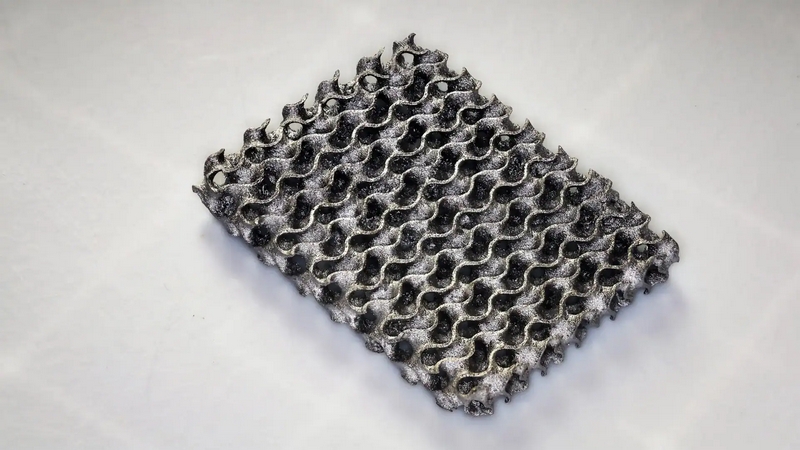
Engineers at EPFL have developed a low-cost way to 3D print dense metal parts using water-based gels instead of molten alloys or powders. Their “hydrogel infusion” process, reported in Advanced Materials, grows metals like iron or copper directly inside a printed gel before baking it into solid form. The result: parts with up to 25× higher strength and only 20% shrinkage versus earlier methods. Because material choice happens after printing, manufacturers could use one setup to produce metals, ceramics, or hybrids; simplifying prototyping for aerospace, energy, and biomedical applications.
Mini 3D Printer With Salt-grain-sized Lens Could Build Living Tissue Inside Body

Researchers at the University of Stuttgart have unveiled a miniature 3D printer small enough to operate inside the human body. Led by Dr. Andrea Toulouse, the 3D Endoscopic Microfabrication (3DEndoFab) team is developing a fiber-optic system that delivers laser-based bioprinting through a strand thinner than a pencil lead. Using a salt-grain-sized lens, it can solidify bio-inks into tissue with micrometer precision. Funded by a USD 2 million Carl Zeiss Foundation grant, the project aims to enable in-situ tissue repair without transplantation; potentially transforming regenerative medicine by allowing surgeons to print new cells and scaffolds directly where healing is needed.
Open-Source Hardware News
OpenSFI Is A Very Interesting Collaboration Between AMD & Intel For Better Firmware Unification

A major collaboration between AMD, Intel, Google, Microsoft, and others is underway to unify how CPUs interface with firmware. The new Open Silicon Firmware Interface (openSFI) aims to define a vendor-neutral, architecture-independent standard for silicon initialization; bridging the gap between low-level CPU firmware and higher-level host systems. The effort complements AMD’s openSIL and Intel’s FSP, with the ultimate goal of reducing redundant engineering, improving interoperability, and promoting long-term sustainability in open firmware development.