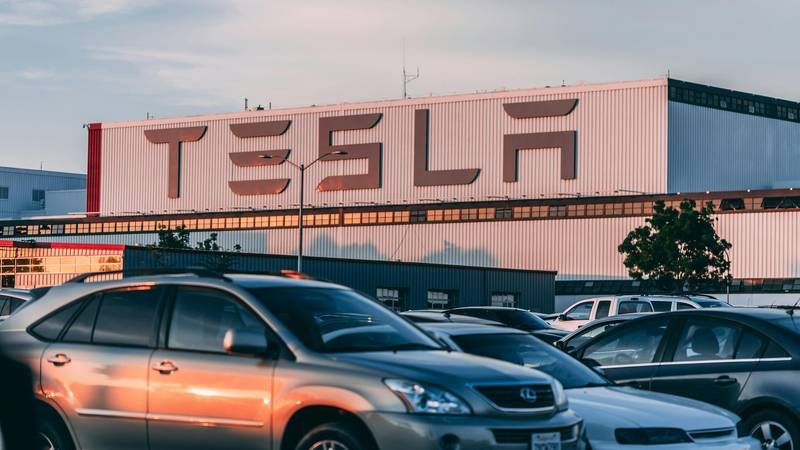
If you’ve ever wondered what could truly disrupt the global chip industry, Elon Musk’s new $20 billion ‘TeraFab’ might just be it. I find it interesting that Tesla and SpaceX are bringing logic, memory, and packaging all under one roof, something I haven’t seen done at this scale before. While I’m intrigued by the rapid iteration this enables, I also remain skeptical with the numerous complexities that chip production brings. But, the potential here is hard to ignore, and I’ll be watching closely to see if Musk’s vision translates into real-world impact for hardware engineers.
Top Stories This Week
- Elon Musk Unveils $20 Billion TeraFab Chip Project
- Nintendo Is Reportedly Working On A Switch 2 Hardware Revision To Meet EU Repair Laws
- How Siemens And Rittal Are Standardising AI Infrastructure
- Local Data Center Critics Praise Microsoft’s Pledge To Stop Using NDAs
- SpaceX Hits Back At Amazon In Orbital Datacenter Dispute
- Is 3D Printing Unlocking Unexpected Futures In Home Design?
- Unitree Capitalizes On The Hype Surrounding Humanoids For Its IPO
- Sound Waves Could Be Used To Remotely Reprogram Material Stiffness, From Implants To Robotic Muscles
- DNA Robots Are Coming
- Scientists Develop Hair-thin Sensors To Revolutionize Cancer Detection
- China’s Open-source Dominance Threatens US AI Lead, US Advisory Body Warns
Hardware Business News
Nintendo Is Reportedly Working On A Switch 2 Hardware Revision To Meet EU Repair Laws

Nintendo’s reported move to revise the Switch 2 for easy battery replacement is a clear response to new EU right-to-repair laws, and it’s an interesting development for the broader hardware world. By making the console and Joy-Con 2 controllers more modular, Nintendo is aligning with a growing push for longevity and reduced e-waste, which I think benefits both users and the industry. While this began as an EU-focused update, there’s a good chance it could influence global standards if consumer demand follows. It’s a practical step that could set a new benchmark for consumer electronics design.
How Siemens And Rittal Are Standardising AI Infrastructure

Siemens and Rittal’s new partnership is one to watch if you’re interested in how infrastructure can keep up with AI’s insatiable appetite for power. By standardising modular “sidecar” power racks for data centres, they’re aiming to make rapid scaling and higher efficiency the new norm. The practical focus on reducing build times and improving reliability is something the whole industry needs as rack power density keeps climbing, and it’s also a very sensible approach that could ripple out beyond data centres, setting a fresh standard for industrial power distribution as digital demand accelerates.
Local Data Center Critics Praise Microsoft’s Pledge To Stop Using NDAs

Microsoft’s decision to abandon NDAs for its data center projects caught my attention, and I must admit that it’s a very positive step for transparency. I personally know firsthand how secrecy can fuel skepticism and erode public trust in large-scale projects, but while I’m encouraged by this move, I share a bit of the community’s caution; true openness means more than just dropping paperwork, it means ongoing honest communication. Still, if other tech giants follow suit, it could set a new, healthier standard for industry-community relations.
SpaceX Hits Back At Amazon In Orbital Datacenter Dispute
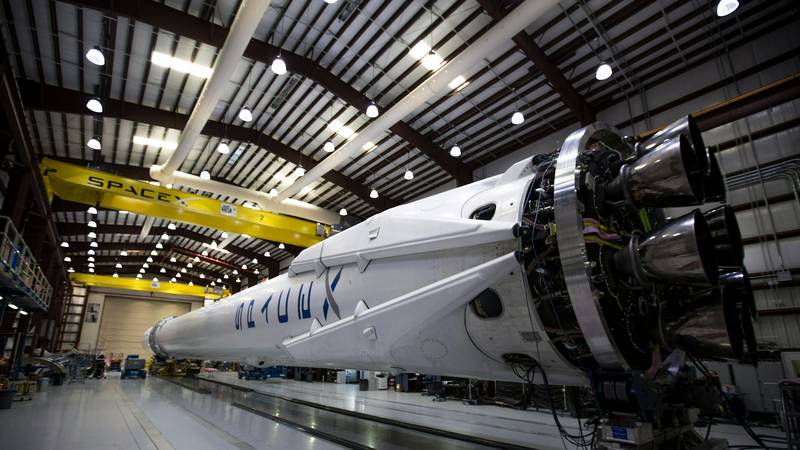
The ongoing dispute between SpaceX and Amazon over orbital datacenters has taken a new turn, with SpaceX urging the FCC to apply the same scrutiny to Blue Origin’s satellite plans as it faced itself. Both companies are pushing ambitious proposals for space-based data processing, yet critics highlight the technical and regulatory hurdles ahead. As these giants trade regulatory jabs, the outcome could set important precedents for future orbital infrastructure. Regardless of which side prevails, it’s clear that the competition is fueling rapid innovation, and raising fascinating questions about the next frontier for data centers.
Hardware Engineering News
Is 3D Printing Unlocking Unexpected Futures In Home Design?

3D printing is quietly transforming home design, and the recent projects in Italy and Japan show just how far the technology has come. With robotics and advanced materials, entire houses can now be printed directly on site, meeting strict building standards and even seismic regulations. The precision and flexibility of digital workflows open up new architectural possibilities while reducing waste and labor. As additive construction matures, it’s not just an experiment, it’s becoming a practical, scalable method for building resilient, energy-efficient homes, and it might just redefine what’s possible in residential engineering.
Unitree Capitalizes On The Hype Surrounding Humanoids For Its IPO

Unitree Robotics’ upcoming $610 million IPO on the Shanghai Stock Exchange is a strong signal of China’s ambitions in humanoid robotics. Their robots’ recent televised martial arts display was impressive, showing clear mechanical progress and capturing public imagination. With over 5,500 units shipped last year and a leading share of the global humanoid market, Unitree is moving quickly from spectacle to practical deployment, even if factory use is still in early stages. This growth demonstrates China’s robust manufacturing ecosystem and its push to apply AI and automation across industries, positioning Unitree as a key player to watch.
Sound Waves Could Be Used To Remotely Reprogram Material Stiffness, From Implants To Robotic Muscles
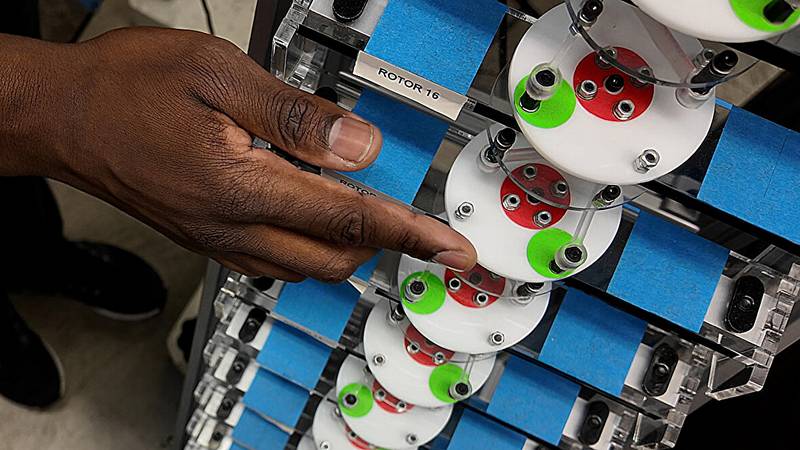
As someone fascinated by both acoustics and materials science, UC San Diego’s latest research on remotely tuning material stiffness with sound waves is genuinely exciting. The idea that you can “pull” a soft region through a structure using nothing but specific sound frequencies feels almost like science fiction, yet it’s grounded in solid engineering. While this is early-stage work, the potential for adaptive implants or robotic muscles that respond to external signals is huge. It’s a reminder that real engineering breakthroughs often start with deceptively simple physical models and a bit of creative thinking.
Hardware R&D News
DNA Robots Are Coming

DNA robots are quickly emerging as one of the most intriguing frontiers in nanotechnology. Researchers are now designing programmable machines from DNA strands that could someday navigate the body to deliver medicine, assemble molecules with atomic precision, or build ultra-small computing devices. While most DNA robots are still in the proof-of-concept phase, advances in molecular design and control, like DNA strand displacement, are bringing real-world applications closer. There are still big challenges, especially in scaling and reliable control, but as infrastructure and cross-disciplinary tools improve, DNA robots could soon play a key role in medicine and nano-manufacturing.
Scientists Develop Hair-thin Sensors To Revolutionize Cancer Detection

Researchers in Australia and Germany have unveiled hair-thin sensors, 3D-printed onto optical fiber tips, that can simultaneously detect multiple cancer biomarkers. Using light-based detection at the molecular level, these sensors promise real-time, minimally invasive monitoring of disease progression and treatment efficacy. The technology is precise enough to track subtle changes in temperature and chemistry, offering the potential for earlier and more reliable cancer diagnosis. As fabrication methods advance, such compact sensors could become invaluable tools for smarter healthcare and even wearable applications, marking a significant step forward in medical diagnostics.
Open-Source Hardware News
China’s Open-source Dominance Threatens US AI Lead, US Advisory Body Warns
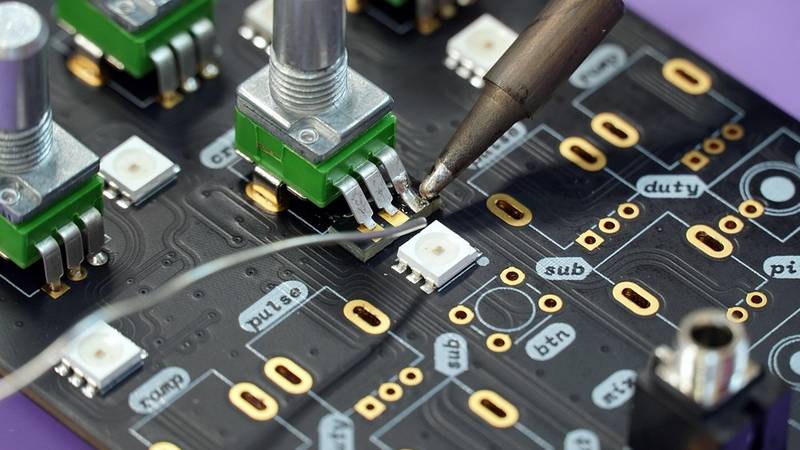
I love open-source hardware, but the US advisory body’s recent warning about China’s open-source AI dominance is something that has given me a lot to think about. The massive uptake of Chinese models, driven by their low cost and flexibility, shows just how quickly the AI landscape can shift, even in the face of US export controls. What stands out to me however is how China’s focus on embodied AI and real-world deployment is creating a feedback loop of data and improvement that’s hard to match. The fact that Western industrial giants are openly praising and adopting these tools, despite security concerns, underscores just how attractive and influential China’s open-source ecosystem has become. If the US wants to maintain a leadership role, it can’t afford to underestimate the power of open, scalable, and widely adopted models.