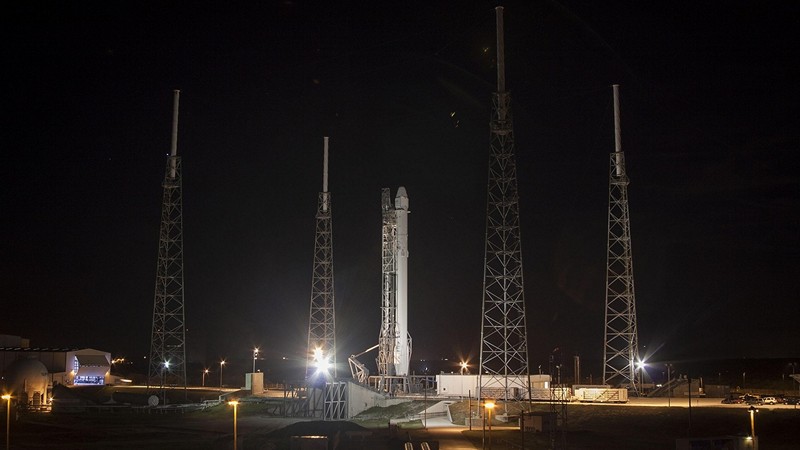
SpaceX’s plan to launch a million satellites as orbital data centers is audacious, and it caught my attention not just because of the scale but because of the engineering implications. While the idea of AI compute in orbit is fascinating and potentially game-changing, the sheer density raises concerns about collisions and space debris, which could hinder future launches. I find it hard not to admire the ambition, yet we also need to reckon with the practical limits of orbital management, and I suspect the next decade will be as much about traffic control as it is about compute power.
Top Stories This Week
- SpaceX Formalizes Plan To Build 1 Million Satellite Orbital Data Center System
- Robotiq Launches Tactile Sensor Fingertips For Adaptive Gripper
- Tesla Recasts Identity As Robotics And AI Platform With Merger Potential
- India Offers Zero Taxes Through 2047 To Lure Global AI Workloads
- Former Google Engineer Convicted Of Stealing GPU And TPU Trade Secrets For Chinese Interests
- 3D Printing Makes Brittle Ceramics Suitable For Industrial Use
- Autonomous Quadrupedal Robot Navigation And Hiking In Challenging Rough Terrains
- Why Intelligent LiDAR Solutions Are The Next Frontier In Security And Safety
- AI Wearable Helps Stroke Survivors Speak Again
- Robots Descend Into Lava Tubes To Prepare For Future Moon Bases
- RISC-V Processors Moving To A Datacenter Near You
Hardware Business News
Robotiq Launches Tactile Sensor Fingertips For Adaptive Gripper
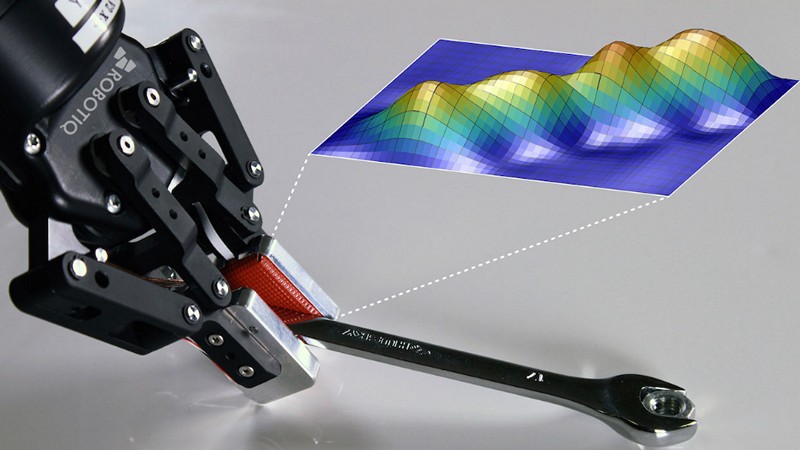
Robotiq’s new TSF-85 tactile fingertips give their 2F-85 Adaptive Gripper a real sense of touch, and is impressive to see how far physical AI has come. Robots can now feel micro-slip and map force across objects, which means manipulation isn’t just a guessing game anymore. While vision will always be important, combining adaptive gripping with tactile sensing lets robots interact reliably with the real world, and it can be seen that such technologies is accelerating AI research and industrial deployment. For anyone building physical AI systems, these grippers are a practical, scalable step beyond experimental hands.
Tesla Recasts Identity As Robotics And AI Platform With Merger Potential

Tesla is shifting its identity from electric vehicles toward a robotics and AI platform, halting Model S and X production to scale Optimus humanoid robots. The company is also exploring potential mergers with SpaceX and xAI, signaling a broader physical AI strategy. While this pivot could unlock new growth avenues, it comes with high execution risk, thin margins, and an already elevated valuation. For observers of robotics and AI, Tesla’s transformation is a notable case of a legacy manufacturer betting heavily on automation, integration, and multi-industry synergy in the coming years.
India Offers Zero Taxes Through 2047 To Lure Global AI Workloads
India is offering foreign cloud providers zero taxes through 2047 to run AI workloads from its data centers, signaling an aggressive bid to become a global compute hub. While incentives could attract billions in investment from Amazon, Google, and Microsoft, challenges like power shortages, water stress, and infrastructure limits remain. The strategy also ties into broader goals for semiconductors, electronics manufacturing, and critical minerals. For the global AI ecosystem, India’s move is a long-term bet on strategic positioning, but execution will determine whether it becomes a true powerhouse or another ambitious policy experiment.
Former Google Engineer Convicted Of Stealing GPU And TPU Trade Secrets For Chinese Interests
A former Google engineer, Linwei Ding, has been convicted of stealing GPU and TPU trade secrets to benefit Chinese interests, closing one of the highest-profile AI espionage cases to date. Ding copied sensitive technical documents on AI data center designs, accelerator architectures, and cluster management while pursuing his own start-up and connections abroad. This case demonstrates the serious strategic importance of AI infrastructure and how intellectual property in this sector is now considered a national security priority.
Hardware Engineering News
3D Printing Makes Brittle Ceramics Suitable For Industrial Use
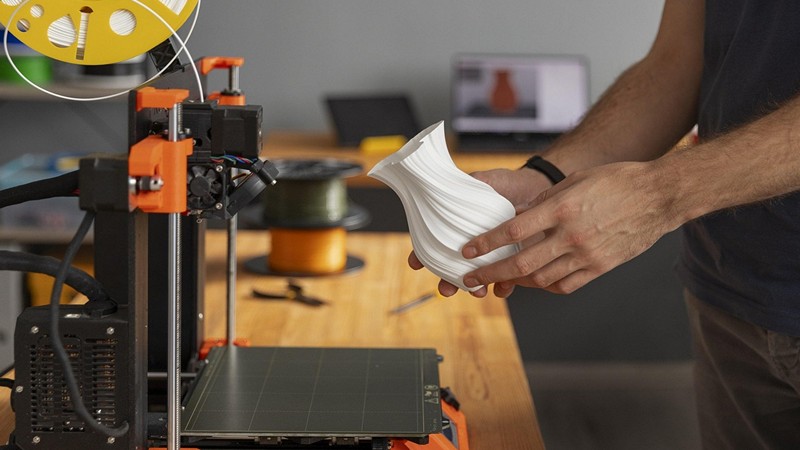
In 3D printing news, Virginia Tech’s new ceramic-metal composites are incredibly fascinating because they finally let shape-memory ceramics scale beyond tiny samples without cracking. By embedding ceramic particles in a metal matrix via additive friction stir deposition, researchers have created components that can bear heavy loads while absorbing energy. For anyone who’s worked with brittle ceramics, this is a rare combination of toughness and functionality. I can easily see applications from aerospace vibration damping to lightweight sports gear, and it’s exciting to think how this approach could reshape how we design multifunctional structural materials in the real world.
Autonomous Quadrupedal Robot Navigation And Hiking In Challenging Rough Terrains
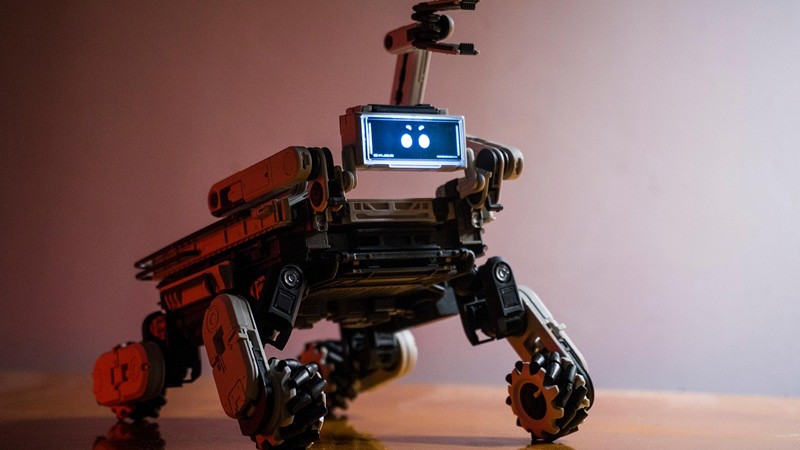
For those interested in robotic applications, I’m intrigued by UCL’s RoboHike project as it continues to push quadrupedal robots into truly unpredictable terrain, where even humans tread carefully. By combining visual, proprioceptive, and contact sensing with learning-based footstep planning, these robots can navigate rocky trails, stairs, and industrial sites with a robustness that was previously science fiction. Beyond research labs, I see real potential for disaster response, inspections, and industrial maintenance, where every second and every foothold matters.
Why Intelligent LiDAR Solutions Are The Next Frontier In Security And Safety
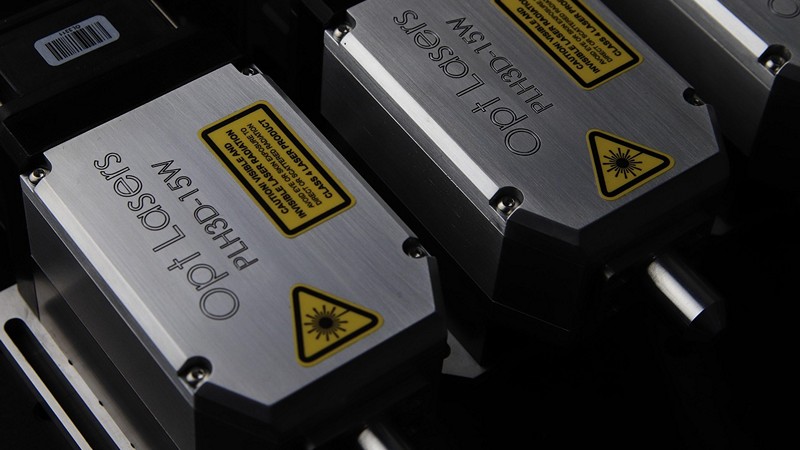
Intelligent LiDAR is emerging as a major game-changer for industrial and critical infrastructure safety. By generating real-time 3D spatial maps and integrating with AI perception, these systems can detect intrusions, monitor sensitive zones, and prevent collisions in busy yards, even in low light or adverse weather. Beyond perimeter security, LiDAR also enables crowd management, operational analytics, and proactive hazard detection all while not compromising privacy. For facilities and operations teams, the technology provides reliable situational awareness that turns reactive safety into predictive, automated intelligence.
Hardware R&D News
AI Wearable Helps Stroke Survivors Speak Again
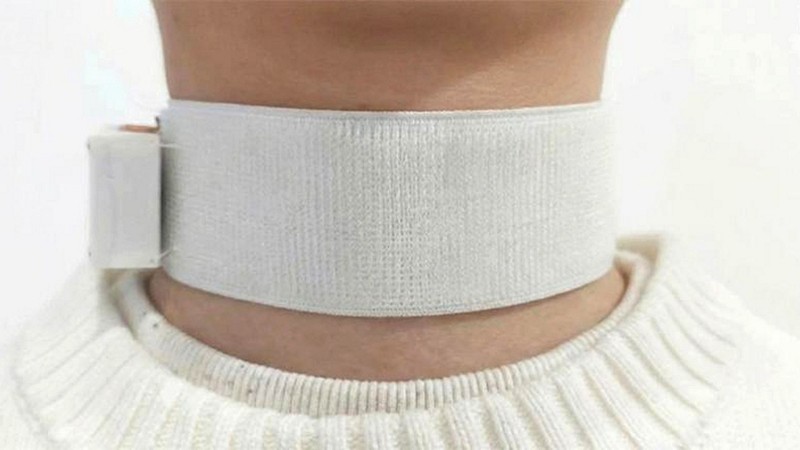
Researchers at the University of Cambridge have recently developed Revoice, a wearable device that helps stroke survivors with dysarthria regain natural speech without implants or surgery. By sensing subtle throat movements and pulse signals, and combining them with AI language and emotion models, the system can reconstruct fluent speech in real time. Early trials show low error rates and improved user satisfaction, which highlights how non-invasive, low-power wearables can meaningfully support rehabilitation. As AI-assisted health devices mature, Revoice points toward practical, scalable tools that restore communication while fitting into everyday life.
Robots Descend Into Lava Tubes To Prepare For Future Moon Bases
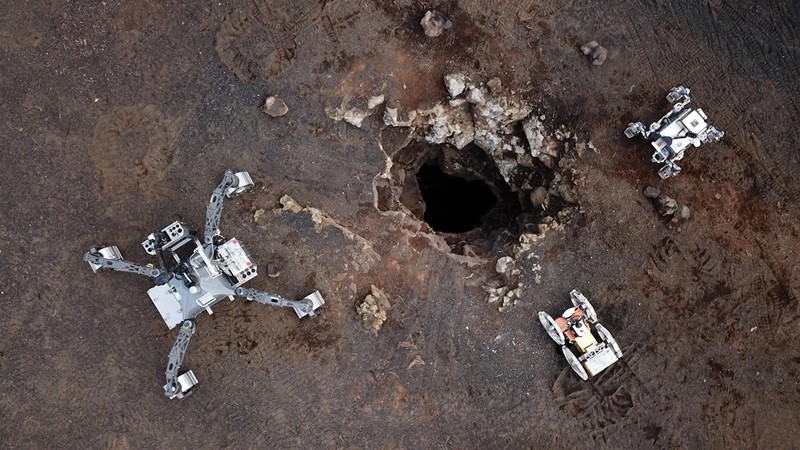
European researchers have demonstrated a multi-robot mission concept designed to explore lava tunnels, which are increasingly viewed as ideal locations for future lunar and Martian bases. By combining scout rovers, sensor payloads, and autonomous mapping robots, the system can safely navigate and map harsh underground environments. Successful field trials in Lanzarote show that coordinated robotic teams can handle complex terrain and limited access points. As space agencies look beyond surface exploration, this work highlights how autonomy and collaboration could make subsurface planetary habitats a realistic target for future missions.
Open-Source Hardware News
RISC-V Processors Moving To A Datacenter Near You
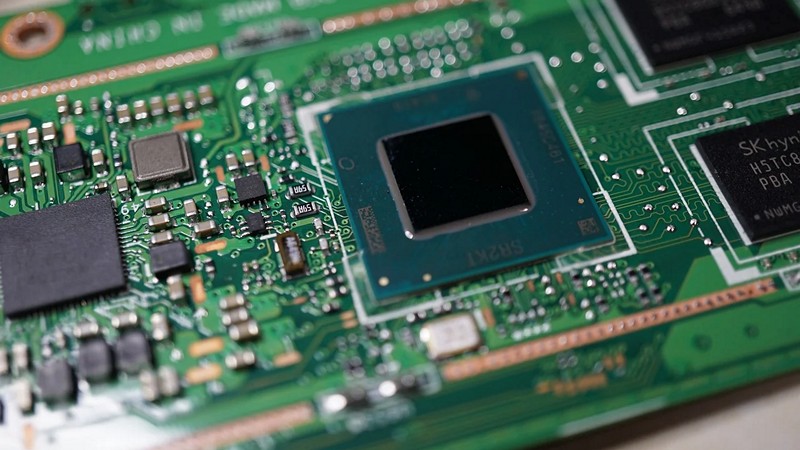
RISC-V is emerging as a credible long-term alternative to x86 and ARM by changing the economics of CPU design rather than chasing short-term performance wins. As an open, royalty-free instruction set architecture, it lowers barriers for silicon innovation while preserving software compatibility across vendors. Recent investment in high-performance RISC-V startups targeting AI data centers shows growing confidence that general-purpose CPUs remain critical alongside accelerators. With its modular design, shared tooling, and openness to experimentation, RISC-V is positioning itself less as a niche architecture and more as a foundational platform for future computing systems.