As China continues to develop cutting-edge robotic technologies, the US is feeling the pressure, introducing new restrictions on foreign-made humanoid robots. How can engineers take advantage of this situation, and why could services like Ponoko help engineers in these changing times?
Introduction – The Big Ban
Recently, the U.S. Federal Communications Commission (FCC) announced a policy restricting the import of foreign-made humanoid robots, quadruped robots, and certain power inverters. Citing concerns over cybersecurity, supply chains, and national security, the policy is expected to have a major impact on Chinese manufacturers looking to enter the US market.
This is not the first time the U.S. has imposed restrictions on Chinese technology. Drones have already faced restrictions, while the rapid development of Chinese AI technologies has also seen the U.S. government consider controls on the use of Chinese open-source AI models.
However, the latest restrictions come at an interesting time, as China has recently demonstrated major advances in robotics and is rapidly expanding its manufacturing capabilities. While the US remains one of the largest developers of robotic technologies, with companies such as Boston Dynamics being a prime example, there is a major difference between developing demonstration platforms and producing robots at commercial scale.
China has invested heavily into its robotics sector, and analysts estimate that the country’s humanoid robot market could reach $15 billion by 2030. China is also estimated to account for roughly 85% of global humanoid robot deployments, giving Chinese manufacturers a significant advantage when it comes to both production and cost.
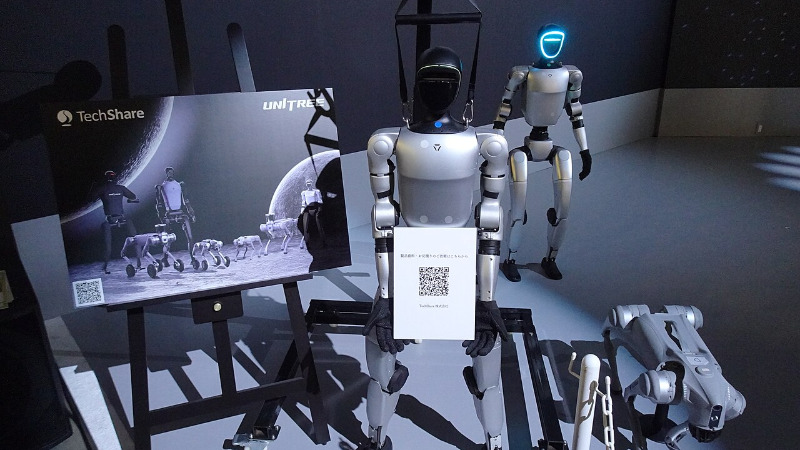
This is important because while companies in the US and elsewhere have demonstrated that they can build highly capable humanoid robots, producing these machines in large quantities is a completely different challenge. China’s enormous manufacturing base allows it to rapidly scale production and reduce costs in ways that many competitors struggle to match.
The new US restrictions are therefore expected to give domestic robotics companies some protection from low-cost Chinese competition. However, the policy is unlikely to significantly slow China’s overall robotics development, as China has a huge domestic market and is increasingly looking towards overseas markets for growth.
In particular, Europe could become an important destination for Chinese humanoid robots as manufacturers look to expand beyond the Chinese market.
How This Affects Engineers in the US
There is no doubt that robotics will play a massive role in society in the coming decades, and engineers from almost every field will be affected by this. Automotive engineers will need to develop vehicles that can increasingly navigate and operate autonomously, medical engineers will need to create miniature robotic devices for use inside patients, and aerospace engineers will need to develop robotic systems for maintaining orbiting infrastructure.
But while companies such as Boston Dynamics have clearly demonstrated that advanced robotic platforms can be built, getting those systems into factories, warehouses, construction sites, and other real-world environments is another challenge entirely.
And when a country with the manufacturing capacity of China can rapidly produce these platforms at competitive prices, it becomes difficult for engineers and companies in the West to compete directly.
However, there is a silver lining to all of this, because the introduction of restrictions could give US engineers a major advantage on the world stage.
The first advantage comes from security and trusted supply chains. Customers looking to deploy robots in sensitive environments may not want to rely on systems manufactured in countries that are considered potential security risks. As a result, robots manufactured within the US could become more attractive, not only to American customers but also to companies in allied markets such as the EU.
The second advantage is manufacturing. Moving some robotics production away from China gives US companies more freedom to develop domestic manufacturing sites and manufacturing skills, thus encouraging greater investment in factories, equipment, and the engineering talent needed to support large-scale robotic production.
Finally, having a domestic robotics industry gives US companies the opportunity to do more than simply meet existing demand. Once the manufacturing infrastructure is established, companies can use it to develop new robotic technologies, improve existing designs, and expand their operations.
How Does Ponoko Get Involved?
So, with this ban coming into force, how can engineers take advantage of Ponoko for their robotic designs and supply chains?
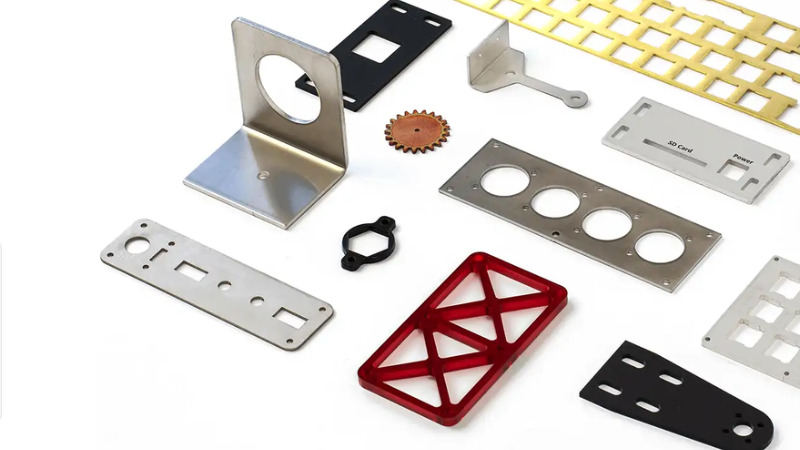
To start, robotics is arguably one of the most material-intensive engineering industries, requiring everything from actuators and motors to body plates, brackets, enclosures, and structural components. From these needs, engineers working in the field will undoubtedly require easy access to a wide range of engineering materials and services.
Ponoko offers engineers access to a wide range of materials, including metals, plastics, and organics, meaning that finding a suitable material for a particular robotic component can be significantly easier, all without requiring engineers to establish relationships with numerous different suppliers.
When considering that Ponoko also supports additional manufacturing processes and finishing options, engineers can get custom-cut sheet parts from initial design through to finished components without needing to introduce unnecessary complexity into their supply chain.
On the matter of supply chains, Ponoko’s US and global manufacturing services also provide engineers with options when it comes to where their parts are produced. When considering the changing nature of the robotics industry, and the need for tighter security controls, this can be extremely advantageous as companies look to reassess their manufacturing strategies in response.
For example, the Oakland Bay Area facility can provide rapid manufacturing services with turnaround times as short as 24 hours, giving engineers a way to quickly produce prototypes without waiting weeks for parts to arrive from overseas, all while protecting potentially valuable IP.
Of course, robotics is about far more than just sheet parts, as just about every robotic system require complex three-dimensional components, whether they are arms, legs, housings, joints, or structural components.
In these cases, Ponoko’s 3D printing and injection molding services provide engineers with additional manufacturing options. This allows engineers to move from early prototypes to small-scale production without necessarily having to completely redesign their manufacturing processes.
Electronics are another key part of modern robotics, particularly as electrification, motors, AI, machine vision, and sensors become increasingly important. A modern robot is not simply a collection of mechanical components, but a highly integrated system that relies on electronics to control virtually every aspect of its operation.
Here, Ponoko’s electronic fabrication services, including PCB fabrication and assembly, can help engineers develop the electronic systems needed for the next generation of robotic platforms.
Again, having access to manufacturing services within the US can help engineers establish more secure supply chains while also reducing some of the risks associated with sending sensitive designs and intellectual property overseas.
Conclusion
The U.S. restrictions on foreign-made humanoid robots clearly indicate that trusted manufacturing and secure supply chains are becoming increasingly important priorities for engineers and technology companies. While the policy creates new opportunities for US robotics companies, success will ultimately depend on how quickly engineers can design, prototype, test, and scale new products.
For one, access to reliable local manufacturing partners will become increasingly important as companies look to reduce supply chain risks while also protecting their intellectual property.
Fortunately, services such as Ponoko provide rapid manufacturing across a wide range of processes, including laser cutting, CNC machining, 3D printing, injection molding, and electronic fabrication.
With these capabilities, engineers can move from concept to prototype and eventually to production while keeping more of their manufacturing process within a trusted supply chain.
As the global robotics industry continues to evolve, engineers who combine innovative designs with resilient manufacturing strategies will be best positioned to take advantage of the next generation of robotics opportunities.